
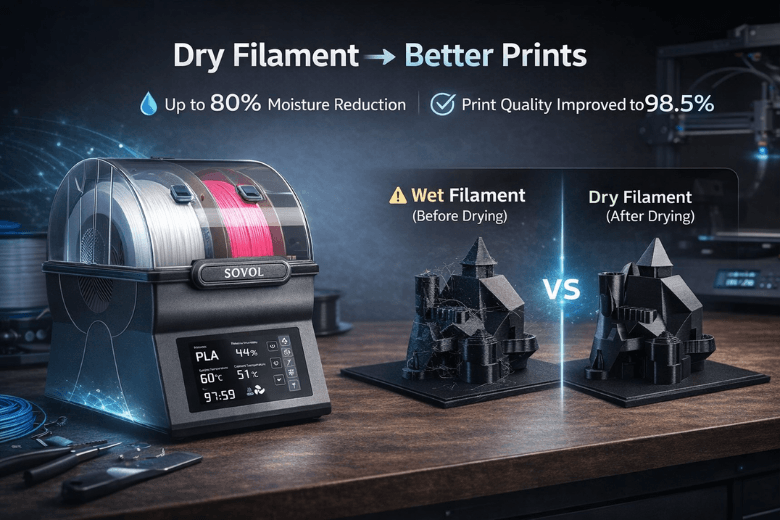
You may find that your 3D prints often turn out weak or rough, despite using quality materials. Moisture in filament remains one of the most frequent, yet unnoticed, causes of poor results. A Filament Dryer addresses this issue by removing excess moisture before you print. If you want to know whether a dryer will truly improve your print quality, you are asking the right question.
Key Takeaways
-
Moisture in filament can weaken prints. Use a filament dryer to remove excess moisture for stronger results.
-
Drying filament improves surface quality. Expect smoother finishes and fewer imperfections in your prints.
-
Regularly drying filament reduces print failures. This leads to more reliable results and less wasted material.
-
Choose a filament dryer with precise temperature control. This ensures optimal drying conditions for various filament types.
-
Store filament properly to prevent moisture absorption. Use airtight containers and desiccants for best results.
Moisture and Filament
How Filament Absorbs Moisture
You may not realise how quickly your filament can absorb water from the air. Many popular materials, such as nylon, PVA, and TPU, are highly hygroscopic. These filaments draw in moisture even when you store them indoors. Humidity acts as the main culprit, especially during damp weather or in rooms without climate control. On a humid day, a spool of nylon can take in enough water within hours to affect your print quality. You will find that proper storage in airtight containers with desiccants helps, but it does not always prevent absorption. This is why you need to consider using a Filament Dryer, especially if you work with sensitive materials.
Effects on Print Quality
Moisture in your filament leads to several print issues. When you heat wet filament, the water turns into steam and creates bubbles inside the extruded plastic. This process weakens the bond between layers, making your prints less durable. You may notice poor layer adhesion, which increases the risk of delamination and failure under stress. For functional parts, this loss of strength can be critical. Swelling and diameter inconsistencies also occur, causing extrusion problems and rough surfaces. Humidity acts as the silent enemy of FDM 3D printing, especially for nylon, PVA, and TPU. You need to control moisture to ensure strong, reliable prints.
Signs of Wet Filament
You can spot wet filament by watching and listening during printing. Bubbling and hissing sounds from the nozzle often signal excess moisture. You may also see stringing, oozing, or rough, pitted surfaces on your finished part. Manufacturers recommend drying new spools before use to avoid these problems. If you store filament without a dryer, you risk moisture absorption over time. Proper storage and regular drying help you maintain consistent print quality and prevent common failures.
How Filament Dryer Works
Drying Process Explained
You need to understand how a filament dryer operates to appreciate its impact on your prints. The device uses controlled heat and airflow to remove moisture from the filament. You place your spool inside the chamber, set the temperature, and let the machine circulate warm air around the material. This process draws out water molecules trapped inside the plastic. Unlike makeshift methods such as ovens or food dehydrators, a dedicated filament dryer maintains a stable temperature and prevents overheating. For example, the PolyMaker PolyDryer runs at temperatures 10 to 15 degrees higher than most DIY setups. This higher and more consistent heat leads to better moisture reduction and improved print quality. You gain precise control over the drying environment, which is essential for achieving reliable results.
Tip: Always check the recommended drying temperature for your filament type. Overheating can damage the spool and affect print performance.
Restoring Filament Quality
You may wonder why drying matters so much for materials like nylon, PETG, and PLA. These filaments absorb moisture quickly, which weakens the plastic and causes print defects. When you use a filament dryer, you restore the filament’s original properties. The drying process removes water, so the plastic melts and extrudes smoothly during printing. You will notice stronger layer adhesion, fewer bubbles, and a smoother surface finish. This restoration is especially important if you store filament in humid conditions or use it for functional parts. By investing in a filament dryer, you ensure that your material performs as intended and your prints reach their full potential.
Filament Dryer Benefits
Stronger Prints
You want your 3D prints to withstand stress and last longer. A filament dryer helps you achieve this by removing moisture that weakens the plastic. When you dry your filament, you prevent steam bubbles from forming during extrusion. This leads to better layer adhesion and stronger bonds between each printed layer. You will notice that your parts can handle more force without cracking or breaking. For engineering projects or functional components, this improvement in strength makes a significant difference. You can trust your prints to perform as intended, even under demanding conditions.
Note: Many users report that dried filament produces parts with up to 30% higher tensile strength compared to prints made with wet filament.
Smoother Surfaces
Surface quality matters, especially for models that require a clean finish. Moisture in filament causes rough textures, pitting, and visible lines on your prints. By using a filament dryer, you eliminate these defects. The plastic extrudes smoothly, resulting in a glossy and uniform surface. You will see fewer imperfections and less post-processing work. This benefit is crucial for display pieces, prototypes, or any application where appearance counts. You can achieve professional-looking results straight from your printer.
-
Common surface issues prevented by drying:
-
Bubbling and pitting
-
Stringing and oozing
-
Uneven or matte finishes
-
Fewer Print Failures
Print failures waste time and material. Wet filament increases the risk of problems such as poor adhesion, warping, and incomplete layers. A filament dryer reduces these risks by ensuring your material stays in optimal condition. You will experience more reliable prints and fewer interruptions. This reliability means you can start long or complex jobs with confidence. You avoid the frustration of failed prints and the cost of wasted filament.
Tip: If you notice frequent stringing or weak spots in your prints, drying your filament often solves the problem.
You invest in a filament dryer because you want consistent, high-quality results. By addressing the root cause of many print issues—moisture—you improve strength, surface finish, and reliability. This simple step transforms your 3D printing experience and helps you get the most from your materials.
Real-World Results
Before and After Prints
You can see a clear difference when you compare prints made with wet filament to those produced after drying. Before drying, you often notice rough surfaces, weak layers, and visible bubbles. These defects make your models look unprofessional and reduce their strength. After using a filament dryer, your prints show smoother finishes and stronger layer bonds. The plastic extrudes evenly, which results in fewer imperfections and a glossy appearance. Many users report that their first print after drying feels like a new experience. You achieve consistent results, even with challenging materials like nylon or PETG.
Professional 3D printing services rely on advanced drying systems to guarantee quality. For example, the DryWise system ensures that your filament reaches the highest standard before printing. This approach acts as a quality assurance tool, reducing the risk of failed prints and wasted material. The BCN3D Smart Cabinet keeps filament dry at all times, using an absorption dryer method. This technology maintains a stable environment, so you avoid the common problems caused by humidity.
You will notice that dried filament produces parts with improved detail and durability. This improvement is especially important for functional prototypes and engineering components.
User Experiences
You do not need to take only the experts’ word for it. Everyday users share similar stories. Many describe how a filament dryer transforms their printing process. One user highlights that drying filament before use is essential for maximising printer performance, especially with filaments designed for specific machines. Others mention that investing in a dryer like DryWise saves time and energy. You reduce material waste and avoid the frustration of failed prints.
Users agree that proper drying leads to reliable, high-quality results. You gain confidence to start long or complex jobs, knowing your filament will not let you down. By addressing moisture, you unlock the full potential of your 3D printer and materials.
Choosing a Filament Dryer
Key Features
When you select a Filament Dryer, you want to ensure it meets the demands of your printing materials and workflow. The right features make a significant difference in both convenience and print quality. You should look for the following:
|
Feature |
Description |
|---|---|
|
Drying Capabilities |
Achieves moisture content between 10% and 30% for various materials. |
|
Compatibility |
Supports large coils (up to 500 mm diameter) and dries multiple filament types at once. |
|
Control Interface |
Offers a 7-inch touch screen for monitoring temperature, humidity, and drying cycles. |
|
Connectivity |
Provides USB or Ethernet connections for easy integration with your setup. |
You need to consider compatibility with your preferred filament brands and materials. Different filaments, such as nylon, PETG, and PVA, absorb moisture at different rates. Some brands, like Bambu Lab, design their machines to work best with their own filament, so you should check for compatibility to achieve optimal results. If you use hygroscopic filaments, such as TPU or carbon-filled nylon, you will benefit most from advanced drying features.
Tip: A smart drying system that alternates between drying and regeneration cycles helps maintain the best conditions for your filament.
Usage Tips
To maximise the effectiveness of your dryer, you should follow a few best practices:
-
Dry new filament for several hours immediately after opening the package.
-
Store all spools in a controlled environment to prevent moisture absorption.
-
Regularly check for signs of moisture, such as bubbling or hissing during printing.
You will achieve the best results by keeping your filament in an enclosed, constant dry environment. Some dryers offer uninterruptable power supplies, which protect your material during power outages. Touch screen controls allow you to adjust settings based on filament type and quantity. By following these steps, you maintain the mechanical properties of your materials and reduce the risk of print failures.
You invest in a quality dryer because you want reliable, high-performance prints every time.
You want reliable, high-quality 3D prints. A filament dryer offers a simple solution for stronger and smoother results. Drying your filament prevents bubbling, stringing, and weak layers, especially with moisture-sensitive materials. You save money and reduce waste, as shown by the difference in cost efficiency and material waste between using a dryer and not using one. Consider adding this tool to your setup for consistent performance and less frustration.
-
Achieve professional results with minimal effort
-
Protect your investment in filament and equipment
FAQ
Why does filament absorb moisture so quickly?
Filament contains microscopic gaps that attract water molecules from the air. You expose filament to humidity every time you open a spool. This process happens faster with hygroscopic materials like nylon or PVA.
Why should you dry filament before every print?
You ensure consistent print quality by drying filament before each use. Moisture causes bubbling, weak layers, and rough finishes. Drying restores the filament’s original properties and prevents common print failures.
Why do some filaments need drying more than others?
Certain filaments, such as nylon and TPU, absorb moisture rapidly due to their chemical structure. You must dry these materials to achieve strong, smooth prints. Less hygroscopic filaments, like ABS, require less frequent drying.
Why is a dedicated filament dryer better than an oven?
A filament dryer gives you precise temperature control and even heat distribution. Ovens often overheat or under-dry filament, risking damage. You achieve safer and more reliable results with a purpose-built dryer.
Why invest in a filament dryer if you print infrequently?
Even occasional printing exposes filament to moisture. You protect your investment and avoid wasted material by keeping filament dry. A dryer ensures you always start with optimal material, regardless of how often you print.
Share:
Top 10 Useful Things to 3D Print at Home
Common 3D Printing Problems and How to Fix Them