
You want a large 3D printer that matches your needs for value, speed, and print quality. The sv08 max 3d printer delivers outstanding build volume and fast print speeds, which set it apart from the Ender-5 Max and Creality K1 Max. Many users in the printing services sector now prefer advanced machines, with this segment holding 48% of the total market share in 2026. Asia-Pacific leads growth at nearly 20%. Your choice depends on whether you prioritise professional results, ease of use, or handling large-scale projects.
Key Takeaways
-
The Sovol SV08 Max offers a large build volume of 350 x 350 x 345 mm, making it ideal for ambitious projects and batch printing.
-
Fast print speeds of up to 700 mm/s enhance productivity, allowing users to complete prototypes quickly and efficiently.
-
Advanced features like Klipper firmware and auto-leveling improve print quality and ease of use, though they may require a learning curve for beginners.
-
The Ender-5 Max is a reliable choice for those prioritising simplicity and tall prints, while the Creality K1 Max excels in speed and smart features.
-
Consider your project needs and workspace when choosing a printer, as each model offers unique strengths and limitations.
SV08 Max 3D Printer Overview
Key Features and Technology
When you explore the sv08 max 3d printer, you encounter a machine designed for ambitious creators. This printer stands out with its impressive build volume, advanced motion system, and smart automation. The following table highlights the most notable features and technologies:
|
Feature |
Description |
|---|---|
|
Build Volume |
350 x 350 x 345 mm, suitable for large-format prototypes and detailed models. |
|
CoreXY Motion System |
Delivers high speeds with up to 700 mm/s and acceleration of 40,000 mm/s². |
|
Linear Guide Rails |
Seven axes (4Z+2Y+1X) provide accuracy and resist deformation. |
|
Independent Z-Motors |
Quad Gantry Leveling ensures precise bed alignment and compensates for wear. |
|
Planetary Gear Extruder |
5.2:1 gear ratio offers strong extrusion and fine detail. |
|
Ceramic Heating Block & AC Heated Bed |
Heats up quickly for faster print starts. |
|
Efficient Cooling Fans |
5020 and 3010 fans cool filament rapidly for crisp results. |
|
Integrated Camera |
Enables real-time monitoring and time-lapse recording. |
|
Klipper Firmware |
Boosts performance with fast G-code response and less vibration. |
|
Remote Control |
Manage prints via WiFi or Ethernet for flexibility. |
|
Z-offset Compensation |
Automatically measures nozzle distance for improved accuracy. |
Tip: The sv08 max 3d printer’s combination of speed, precision, and automation makes it ideal for users who want to tackle complex or large-scale projects without constant supervision.
Strengths and Weaknesses
You benefit from the sv08 max 3d printer’s large build area, which lets you print bigger models or multiple parts in one go. The CoreXY system and linear rails give you both speed and accuracy, so you can finish projects faster without sacrificing quality. The integrated camera and remote control features allow you to monitor progress from anywhere, which suits busy professionals and educators.
However, you may find the advanced features require a learning curve if you are new to 3D printing. The machine’s size also means it needs more workspace. Maintenance can take extra time due to the complex motion system. Despite these points, the sv08 max 3d printer remains a top choice for those who value performance and versatility.
Main Competitors Overview
Ender-5 Max Summary
You may recognise the Ender-5 Max as a reliable choice for users who want a large-format 3D printer without a steep learning curve. This model features a 350 x 350 x 400 mm build volume, which matches the SV08 Max in footprint but offers slightly more height. The Ender-5 Max uses a Cartesian frame, which provides stability for taller prints. You benefit from a straightforward assembly process and a user-friendly interface.
Note: The Ender-5 Max does not include advanced automation or high-speed features. You may find print speeds slower than the SV08 Max, with typical rates around 100 mm/s. The printer supports a wide range of filaments, including PLA, ABS, and PETG, making it versatile for most hobbyist projects.
Key Features of Ender-5 Max:
-
Large build volume (350 x 350 x 400 mm)
-
Sturdy metal frame for stability
-
Silent stepper drivers for quieter operation
-
Basic touchscreen interface
You may encounter limitations if you require rapid prototyping or advanced remote monitoring. The Ender-5 Max suits you if you value reliability and simplicity over cutting-edge speed or automation.
Creality K1 Max Summary
The Creality K1 Max stands out for its focus on speed and smart features. You get a 300 x 300 x 300 mm build volume, which is smaller than both the SV08 Max and Ender-5 Max. However, the K1 Max compensates with a CoreXY motion system and Klipper firmware, enabling print speeds up to 600 mm/s. This makes it a strong contender if you prioritise fast turnaround times.
|
Feature |
Ender-5 Max |
K1 Max |
|---|---|---|
|
Build Volume (mm) |
350 x 350 x 400 |
300 x 300 x 300 |
|
Max Print Speed (mm/s) |
100 |
600 |
|
Motion System |
Cartesian |
CoreXY |
|
Smart Features |
Basic |
Advanced (AI camera, auto-levelling) |
You also benefit from advanced features such as an AI camera for print monitoring, automatic bed levelling, and WiFi connectivity. The K1 Max targets users who want a blend of speed, convenience, and modern technology. If you work in a fast-paced environment or need smart automation, the K1 Max offers a compelling package.
Large Build Volume Comparison
SV08 Max Build Volume
You gain a significant advantage with the SV08 Max due to its large build volume of 350 x 350 x 345 mm. This generous space allows you to print large prototypes, functional parts, or artistic models in a single session. You can also arrange multiple smaller objects on the print bed, which increases your productivity and reduces the time spent on repeated setups. The SV08 Max’s design supports both ambitious one-piece prints and efficient batch production. When you work on complex projects, you avoid the need for splitting models and assembling them later. This not only saves time but also improves the structural integrity of your creations.
Ender-5 Max and K1 Max Build Volumes
You will notice that the Ender-5 Max offers a build volume of 350 x 350 x 400 mm. This matches the SV08 Max in width and depth but provides extra height. If you focus on tall objects, such as architectural models or vertical prototypes, the Ender-5 Max gives you more flexibility. However, it lacks the advanced motion system and automation found in the SV08 Max, which can affect your workflow speed.
The Creality K1 Max features a build volume of 300 x 300 x 300 mm. While this is still substantial, it falls short of the other two printers. You may find the K1 Max suitable for medium-sized models or multiple small parts, but it limits your ability to tackle truly large projects in one go. The following table summarises the build volume specifications:
|
Printer |
Build Volume (mm) |
Notable Strengths |
|---|---|---|
|
SV08 Max |
350 x 350 x 345 |
Large area, batch printing, speed |
|
Ender-5 Max |
350 x 350 x 400 |
Extra height, stability |
|
Creality K1 Max |
300 x 300 x 300 |
Fast printing, smart features |
Impact on Project Size
You experience a direct impact on your workflow and project possibilities based on the build volume of your 3D printer. A large build volume enables you to create bigger objects in a single print, which streamlines your process and reduces the need for assembly. This efficiency proves especially valuable in rapid prototyping and mass production environments, where you want to minimise material waste and maximise output. You can also print several smaller parts at once, which significantly boosts your production rate.
When you choose a printer with a large build volume, such as the SV08 Max, you unlock new creative opportunities. You can produce life-sized prototypes, intricate cosplay props, or functional engineering parts without compromise. You avoid the frustration of splitting models and dealing with post-processing seams. For educators and professionals, this means you can demonstrate complex concepts or deliver client projects faster and with fewer errors.
Tip: If you regularly work on large-scale projects or need to print multiple items simultaneously, prioritising a large build volume will transform your workflow and productivity.
Speed and Performance
Print Speed Benchmarks
You want fast printing when you work on large projects or need quick turnaround. The Sovol SV08 Max leads the market with a maximum speed of 700 mm/s. This high speed gives you a clear advantage if you value efficiency. The Creality K1 Max also offers fast printing, reaching up to 600 mm/s, which is much faster than most standard printers. The Ender-5 Max, however, operates at a slower pace, making it less suitable for rapid production.
-
The Sovol SV08 Max achieves fast printing at 700 mm/s, ideal for large-scale jobs.
-
The Creality K1 Max supports fast printing up to 600 mm/s, which suits users who need speed and smart features.
-
The Ender-5 Max focuses on print quality but does not match the high speed of the other two models.
You will notice that fast printing reduces your waiting time and increases your productivity. When you use a printer with high speed, you can complete prototypes in hours or days instead of weeks. This benefit allows you to test, adjust, and improve your designs quickly.
Reliability and Consistency
You need reliable performance for large-scale printing. The Sovol SV08 Max provides consistent results with a positional error of just 0.02 mm. This accuracy ensures that your print quality remains high, even at fast printing speeds. The following table compares reliability features:
|
Feature |
Sovol SV08 Max |
Creality K1 Max |
|---|---|---|
|
Maximum Speed |
700 mm/s |
600 mm/s |
|
Positional Error |
≤0.02 mm |
N/A |
|
Acceleration |
40,000 mm/s² |
N/A |
|
Special Features |
N/A |
AI error detection, auto-leveling |
You will find that reliable fast printing shortens your production cycle. You can deliver projects faster and maintain excellent print quality. This combination of speed and reliability is essential for professionals and educators who cannot afford delays or errors.
Tip: Choose a printer that balances fast printing with consistent print quality. This approach will help you meet deadlines and achieve the best results for every project.
Print Quality and Materials
Layer Resolution and Detail
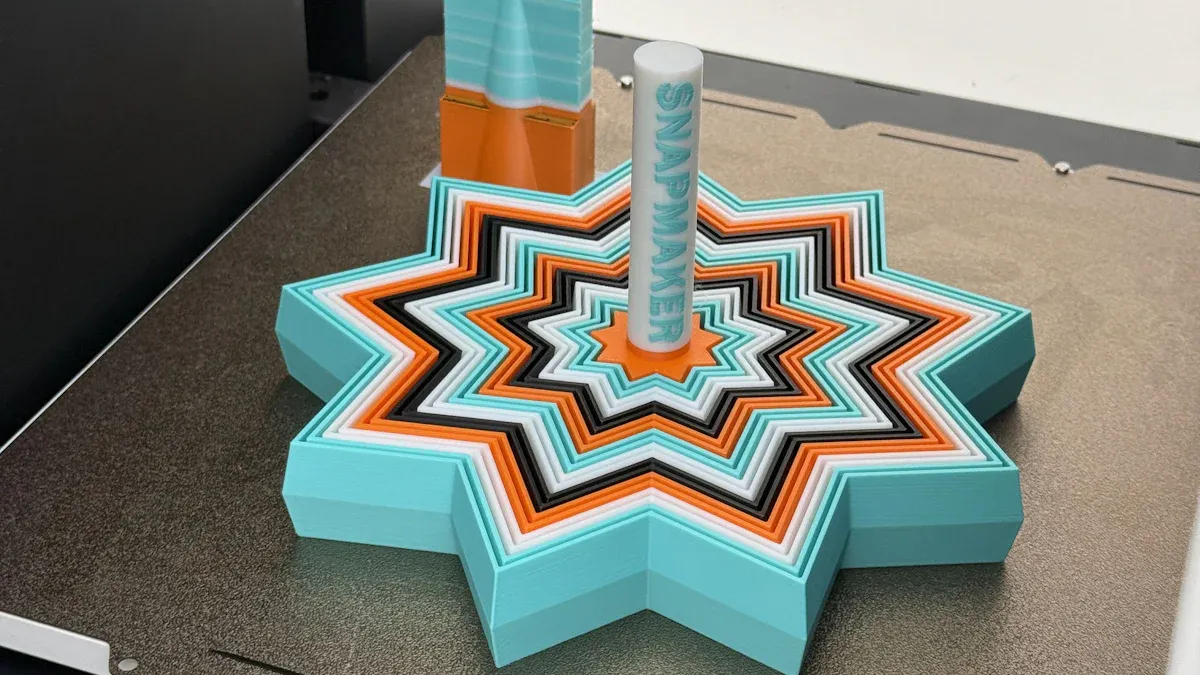
You demand high-quality prints when you invest in a large 3D printer. The Sovol SV08 Max delivers exceptional results by focusing on precision at every stage. You achieve fine layer resolution, which means your models show crisp edges and smooth surfaces. The advanced CoreXY motion system and linear rails work together to minimise vibration. This design ensures that each layer aligns perfectly, enhancing printing accuracy and overall detail.
You notice that the Ender-5 Max also provides reliable results, especially for taller prints. However, the lack of advanced motion control can affect precision during long jobs. The Creality K1 Max uses Klipper firmware to boost speed without sacrificing printing accuracy. You benefit from consistent layer stacking, which is essential for professional prototypes and artistic models.
Tip: For projects that require intricate details or functional parts, always check the printer’s minimum layer height and motion system. These factors directly impact the level of precision you can achieve.
Material Compatibility
You expand your creative options when you choose a printer that supports a wide range of materials. The Sovol SV08 Max stands out for its versatility. You can print with standard filaments like PLA and PETG, as well as advanced materials such as ABS, ASA, PC*, PA, PA-CF, and PET-CF. This flexibility allows you to tackle engineering prototypes, flexible parts, or heat-resistant components with confidence.
The Ender-5 Max supports PLA, PETG, TPU, ABS, ASA, PLA-CF, and PA*. You find it suitable for most hobbyist and educational projects. The Creality K1 Max handles PLA, PETG, ABS, TPU, and several special materials, making it a strong choice for users who want both speed and material variety.
|
Printer Model |
Supported Materials |
|---|---|
|
Ender-5 Max |
PLA, PETG, TPU, ABS, ASA, PLA-CF, PA* |
|
Creality K1 Max |
PLA, PETG, ABS, TPU, special materials |
You gain more project versatility when your printer handles multiple filaments. This capability, combined with high precision, ensures you can deliver complex designs and functional parts without compromise. You achieve the best results when you match your material choice to your project’s demands and your printer’s strengths.
Usability and Features
Assembly and Setup
You want a smooth start when you unbox your 3D printer. The Sovol SV08 Max arrives mostly pre-assembled, so you can complete setup quickly. You only need to attach a few components and follow the clear instructions. This approach saves you time and reduces frustration. In contrast, the Ender-5 Max requires more frame assembly, which can challenge beginners and slow down your first print. The Creality K1 Max stands out for its straightforward setup process. You can start printing within an hour after unboxing, making it a strong choice if you value ease of use.
Tip: Always check the assembly requirements before you buy a large 3D printer. A simple setup process helps you avoid common mistakes and gets you printing sooner.
User Experience for Beginners
You expect a user-friendly experience, especially if you are new to 3D printing. The Sovol SV08 Max features a 7" HD touchscreen with WiFi connectivity, giving you a modern and intuitive interface. You can control prints, adjust settings, and monitor progress with ease. The Ender-5 Max uses a Creality OS touchscreen that integrates with cloud services, catering to different user preferences. The Creality K1 Max offers the simplest experience for beginners. Its guided setup and automatic calibration mean you spend less time learning and more time creating. If you want the best ease of use, the K1 Max leads in this area.
Advanced Features (Klipper, Leveling Sensor)
You benefit from advanced features that enhance your printing workflow. The Sovol SV08 Max includes Klipper firmware, which boosts speed and print quality. You also get a precise leveling sensor that automatically measures and adjusts the nozzle distance. These advanced features reduce manual calibration and improve reliability. The Creality K1 Max also offers advanced features such as AI camera monitoring and auto-levelling, making it suitable for demanding projects. The Ender-5 Max provides basic automation but lacks the advanced features found in the other two models.
Note: Advanced features like Klipper and automatic leveling sensors help you achieve consistent results, even on complex or large-scale prints.
Software and Connectivity
Supported Slicers
You gain flexibility when you select a 3D printer that supports multiple slicers. The Sovol SV08 Max works seamlessly with popular slicers such as Cura, PrusaSlicer, and SuperSlicer. You can also use OrcaSlicer, which offers advanced features for professional workflows. The Ender-5 Max supports Cura and Simplify3D, giving you reliable compatibility for most hobbyist projects. Creality K1 Max integrates with Creality Print and also accepts files from Cura and PrusaSlicer. You can choose the slicer that matches your workflow and skill level.
Tip: If you want to optimise your prints, experiment with different slicers. Each software provides unique settings and profiles that can improve your results.
You benefit from open-source slicers because they allow you to customise print parameters. You can adjust layer height, infill, and support structures to suit your project. You also access community profiles and updates, which help you stay current with new materials and techniques.
Remote Monitoring and Control
You achieve greater control over your printing process when you use remote monitoring features. The Sovol SV08 Max includes a built-in 1280×720 HD camera. You can watch your prints in real time and record time-lapse videos. You also gain cloud integration with Obico, which enables advanced cloud-based control. You can manage your printer from anywhere and receive alerts if a print fails. Intelligent print failure detection helps you avoid wasted material and time.
The following table summarises key remote monitoring and control features:
|
Feature |
Description |
|---|---|
|
Camera |
Built-in 1280×720 HD camera for remote monitoring and time-lapse recording. |
|
Cloud Integration |
Integration with Obico for advanced cloud-based control. |
|
Print Failure Detection |
Intelligent print failure detection capabilities. |
Creality K1 Max offers similar remote monitoring through its AI camera and WiFi connectivity. You can check progress and intervene if needed. Ender-5 Max provides basic cloud integration but lacks advanced camera features. You gain peace of mind when you monitor prints remotely. You can respond quickly to issues and ensure consistent results.
Note: Remote monitoring and intelligent control features help you save time and reduce errors. You can focus on other tasks while your printer works efficiently.
Price and Value
Upfront Cost Comparison
You want to make an informed decision when investing in a large 3D printer. The Sovol SV08 Max stands out for its affordability. You pay less upfront compared to the Creality K1 Max, which comes at a higher price. The Ender-5 Max sits between these two, offering a balance of features and cost. The following table summarises the current market prices and features:
|
Printer |
Cost |
Features |
|---|---|---|
|
Large build space, fast, accurate, multi-material printing, open-source |
||
|
Creality K1 Max |
Pricier |
AI tools, auto-leveling, ceramic heater, cooling fans, advanced features |
|
Ender-5 Max |
Moderate |
Tall build volume, stable frame, basic automation |
You see that the SV08 Max delivers high quality at a lower price. The K1 Max offers advanced technology, but you pay a premium for those features.
Running Costs and Maintenance
You must consider ongoing expenses when choosing a printer. The Sovol SV08 Max uses open-source parts, which lowers maintenance costs. You find replacement components easily and avoid expensive proprietary systems. The Ender-5 Max also keeps running costs reasonable, thanks to its simple design. The Creality K1 Max requires specialised parts for its advanced features, which increases maintenance expenses.
You notice that regular upkeep ensures consistent quality. Cleaning the print bed, lubricating rails, and replacing worn parts help you maintain peak performance. You spend less time troubleshooting and more time producing high quality prints.
Tip: Schedule routine maintenance to preserve print quality and extend your printer’s lifespan.
Long-Term Value
You gain long-term value by selecting a printer that balances cost and quality. The Sovol SV08 Max offers reliable performance and high quality output for years. You benefit from its robust construction and versatile material compatibility. The Ender-5 Max provides steady quality, making it suitable for educational and hobbyist use. The Creality K1 Max delivers advanced features, but you must weigh the higher price against the quality improvements.
You achieve the best results when you invest in a printer that meets your needs without overspending. Consistent quality, low maintenance, and affordable parts ensure you maximise your return on investment.
Note: Prioritise quality and affordability to secure lasting value from your 3D printer.
Pros and Cons Summary
SV08 Max Pros and Cons
You gain a powerful tool with the SV08 Max. This printer offers a large build volume, rapid print speeds, and advanced automation. You can handle complex projects with ease. The open-source design keeps your running costs low. However, you may need extra workspace and time to learn the advanced features.
Pros:
-
Large build volume for ambitious projects
-
Fast print speeds up to 700 mm/s
-
Advanced automation (Klipper firmware, auto-levelling)
-
Wide material compatibility
-
Integrated camera and remote monitoring
-
Affordable upfront cost
Cons:
-
Requires more workspace due to size
-
Learning curve for beginners
-
Maintenance can be more involved
Tip: If you want versatility and speed for large-scale printing, the SV08 Max stands out as a top choice.
Ender-5 Max Pros and Cons
You find the Ender-5 Max reliable and straightforward. The tall build volume suits vertical prints. The simple design makes assembly and maintenance easy. However, you sacrifice speed and advanced features.
Pros:
-
Tall build volume (350 x 350 x 400 mm)
-
Stable frame for consistent results
-
User-friendly assembly and operation
-
Moderate price point
Cons:
-
Slower print speeds (around 100 mm/s)
-
Lacks advanced automation and smart features
-
Limited remote monitoring
Note: The Ender-5 Max fits you if you value reliability and simplicity over cutting-edge technology.
K1 Max Pros and Cons
You experience modern features with the K1 Max. The CoreXY system and Klipper firmware deliver high speed. Smart automation and AI tools enhance your workflow. The smaller build volume limits very large projects. The higher price may not suit every budget.
Pros:
-
Fast print speeds up to 600 mm/s
-
CoreXY motion system for precision
-
Advanced features (AI camera, auto-levelling, WiFi)
-
Easy setup and beginner-friendly interface
Cons:
-
Smaller build volume (300 x 300 x 300 mm)
-
Higher upfront and maintenance costs
-
Some proprietary parts increase running expenses
|
Printer |
Build Volume |
Max Speed |
Key Strength |
Main Limitation |
|---|---|---|---|---|
|
350×350×345 mm |
700 mm/s |
Versatility, speed |
Size, learning curve |
|
|
Ender-5 Max |
350×350×400 mm |
100 mm/s |
Simplicity, stability |
Fewer smart features |
|
K1 Max |
300×300×300 mm |
600 mm/s |
Automation, speed |
Smaller build, cost |
Advice: Choose the printer that matches your project size, speed needs, and budget for the best results.
Best Use Cases
For Hobbyists
You want a 3D printer that balances affordability, features, and ease of use. The Sovol SV08 Max offers a generous build volume and intuitive controls, making it suitable for ambitious home projects. However, you may also consider alternatives like the Anycubic Photon Mono M7 Max and Bambu Lab A1. These models provide user-friendly interfaces and competitive prices, ideal for hobbyists starting out or seeking reliable upgrades.
|
Printer Model |
Price |
Features |
Ease of Use |
|---|---|---|---|
|
Anycubic Photon Mono M7 Max |
< $1,000 |
Heated resin vat, auto resin feed, Wi-Fi |
Intuitive UI, minimal resin mess |
|
Bambu Lab A1 |
$399 |
Four-colour prints, built-in camera |
Easy setup and operation |
-
Anycubic Photon Mono M7 Max: Fast, precise, and affordable for enthusiasts.
-
Bambu Lab A1: High-quality prints and simple operation for beginners.
Tip: Choose a printer that matches your skill level and project ambitions.
For Professionals
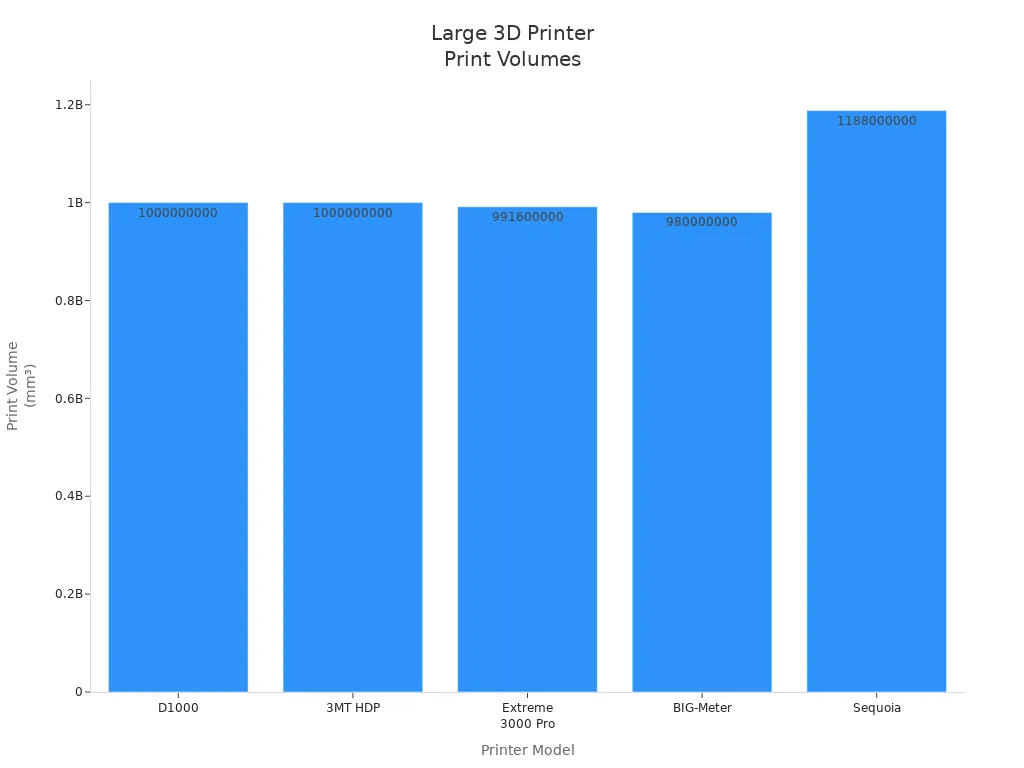
You require high performance and reliability for demanding tasks. The Sovol SV08 Max delivers consistent results and advanced automation, but you may need even larger or more specialised machines for industrial work. Models such as the D1000, 3MT HDP, and Extreme 3000 Pro offer vast build volumes, heated chambers, and multi-nozzle options.
|
Printer Model |
Print Volume (mm) |
Features |
|---|---|---|
|
D1000 |
1000 x 1000 x 1000 |
Heated plate, dual extruder, closed chamber |
|
3MT HDP |
1000 x 1000 |
Heated chamber, hotend up to 350°C, safety sensors |
|
Extreme 3000 Pro |
1100 x 1100 x 820 |
Three nozzles, auto-levelling, filament detection |
Note: For professional environments, prioritise reliability and advanced features to support continuous production.
For Educators
You need a printer that is safe, reliable, and easy to maintain. The Sovol SV08 Max provides a robust platform for classroom demonstrations and student projects. Its large build area allows you to print multiple models at once, supporting collaborative learning. You benefit from features like auto-levelling and remote monitoring, which reduce supervision time and simplify troubleshooting.
-
Print several student designs in one session.
-
Use remote monitoring to oversee progress from your desk.
-
Minimise downtime with automated calibration.
Tip: Select a printer with safety features and straightforward maintenance for educational settings.
For Large-Scale Projects
You tackle projects that demand significant build volume and speed. The Sovol SV08 Max supports large-scale printing for prototypes, props, or engineering parts. For industrial-scale needs, consider the BigRep ONE v3 or Elegoo OrangeStorm Giga. These machines offer over one cubic metre of build space and advanced extruder options.
|
Feature |
BigRep ONE v3 |
|---|---|
|
Build Volume |
1005 x 1005 x 1005 mm |
|
Nozzle Options |
0.6 mm, 1 mm, 2 mm |
|
Total Capacity |
Over one cubic metre |
|
Feature |
Elegoo OrangeStorm Giga |
|---|---|
|
Print Speed |
Up to 300mm/s |
|
Multi-Nozzle Capability |
Up to 4 nozzles |
|
Speed Comparison |
Six times faster than standard |
You achieve efficient large-scale printing with these advanced systems, enabling rapid prototyping and production for industrial applications.
Buyer’s Guide
Key Factors to Consider
When you select a large 3D printer in 2026, you must weigh several factors to ensure the best fit for your needs. Start by assessing the build volume. If you plan to print large models or multiple parts at once, choose a printer with a generous build area. Speed matters for rapid prototyping, so compare maximum print speeds. The SV08 Max and K1 Max both offer high speeds, but the SV08 Max leads in this area.
You should examine the motion system and stability. CoreXY systems, like those in the SV08 Max and K1 Max, provide faster and more precise movement. Auto-leveling is essential for consistent results. You will find that all three printers offer auto-leveling, but the implementation varies. The SV08 Max uses advanced sensors for auto-leveling, which reduces manual calibration. The K1 Max features AI-assisted auto-leveling, making setup even easier. The Ender-5 Max includes basic auto-leveling, which suits straightforward projects.
Material compatibility expands your project options. Check if the printer supports the filaments you need. User experience also plays a role. Look for intuitive interfaces, remote monitoring, and auto-leveling features that simplify operation. Budget remains a key factor. The SV08 Max offers strong value, while the K1 Max commands a higher price for its advanced auto-leveling and smart features.
Tip: Prioritise auto-leveling and remote monitoring if you want to minimise downtime and errors.
Common Pitfalls to Avoid
Many users overlook the importance of reliable auto-leveling. If you ignore this feature, you risk failed prints and wasted material. Always confirm that the auto-leveling system matches your skill level. Some printers offer auto-leveling that requires manual adjustment, which can frustrate beginners. Others, like the K1 Max, provide fully automated auto-leveling, reducing the chance of mistakes.
Do not underestimate the learning curve. Advanced features, including auto-leveling, may require time to master. Allocate space for your printer, as large models need room for both the machine and finished prints. Avoid choosing a printer based solely on speed or price. Balance auto-leveling, build volume, and material compatibility for the best results.
Note: Consistent auto-leveling ensures reliable prints and saves you time on troubleshooting.
|
Factor |
SV08 Max |
Ender-5 Max |
K1 Max |
|---|---|---|---|
|
Build Volume |
Large |
Tall |
Medium |
|
Print Speed |
Very Fast |
Moderate |
Fast |
|
Auto-leveling |
Advanced |
Basic |
AI-assisted |
|
User Experience |
Modern |
Simple |
Beginner-friendly |
|
Price |
Affordable |
Moderate |
Higher |
You will make the best choice by focusing on auto-leveling, print volume, and ease of use. These factors ensure your investment delivers reliable performance for years.
You find the Sovol SV08 Max ideal for professionals and large-scale projects due to its speed and build volume. Hobbyists benefit from the Ender-5 Max’s simplicity, while educators appreciate its reliability. The Creality K1 Max suits those who value automation and fast turnaround. Assess your project needs and workspace before choosing. Explore manufacturer websites and user forums for detailed reviews and support.
Tip: Compare features and prices to ensure your investment delivers lasting value.
FAQ
What makes the Sovol SV08 Max stand out from other large 3D printers?
You benefit from the SV08 Max’s combination of high speed, large build volume, and advanced automation. Its CoreXY system and Klipper firmware deliver professional results. You also enjoy remote monitoring and broad material compatibility.
Can beginners use the SV08 Max easily?
You can start with the SV08 Max thanks to its pre-assembled design and intuitive touchscreen. However, you may need time to learn advanced features. The user manual and online resources help you master the basics quickly.
Which printer is best for printing tall objects?
You should choose the Ender-5 Max for tall prints. Its 400 mm height suits architectural models and vertical prototypes. The SV08 Max and K1 Max offer less height but excel in speed and automation.
How do running costs compare between these printers?
You save money with the SV08 Max and Ender-5 Max due to open-source parts and easy maintenance. The K1 Max requires more expensive proprietary components, which increases long-term costs.
Do all three printers support remote monitoring?
You enjoy remote monitoring with the SV08 Max and K1 Max. Both include built-in cameras and WiFi connectivity. The Ender-5 Max offers basic cloud integration but lacks advanced camera features.
Share:
How the SH03 Filament Dryer Stands Out Among Leading Filament Dryers
What Makes the SV08 Max 3D Printer Stand Out in 2026