
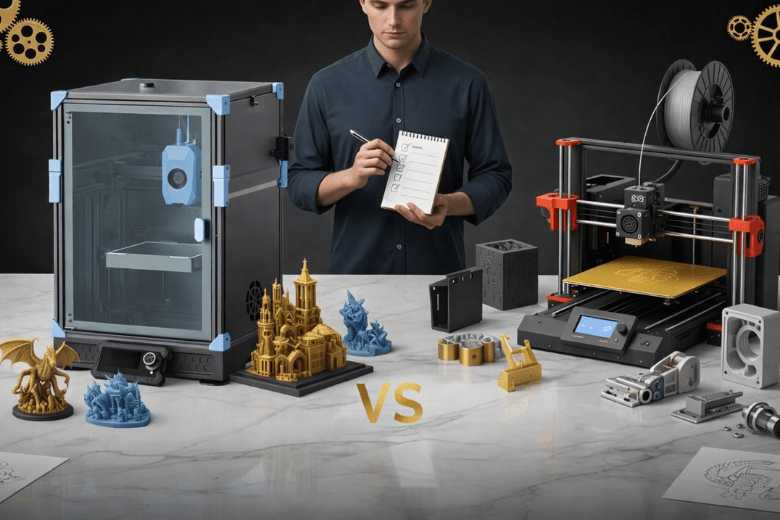
When you choose between resin vs FDM 3D printers, you must weigh your project priorities. Resin printers deliver higher detail and precision, while FDM printers offer improved speed and affordability. The key differences stand out in several areas:
|
Attribute |
Resin Printers |
FDM Printers |
|---|---|---|
|
Print Quality |
Higher detail and precision |
Lower detail, improving |
|
Speed |
Generally slower |
Generally faster |
|
Cost |
More expensive |
More affordable |
|
Ease of Use |
Steeper learning curve |
Mostly plug-and-play |
If you value ultra-fine detail for models or miniatures, resin suits you best. For functional parts or quick prototypes, FDM remains the practical choice. Consider your priorities and the key differences between resin vs FDM before you start your 3D printing journey.
Key Takeaways
-
Resin printers excel in detail and precision, making them ideal for intricate models like miniatures and dental applications.
-
FDM printers are faster and more affordable, suitable for functional parts and larger prototypes, offering a user-friendly experience.
-
Consider your project needs: choose resin for high-quality finishes and FDM for strength and cost-effectiveness.
-
Post-processing for resin prints is more complex, requiring washing and curing, while FDM prints need minimal cleanup.
-
Safety is crucial; handle resin with care and ensure good ventilation, while FDM is generally safer and cleaner.
Resin vs FDM: How 3D Printing Works
When you explore 3d printing, you encounter two main technologies: resin and fdm. Each method uses a unique process to turn digital designs into physical objects. Understanding these differences helps you choose the right tool for your project.
|
Aspect |
Resin 3D Printing |
FDM 3D Printing |
|---|---|---|
|
Higher detail and smoother surfaces |
Lower detail, more visible layer lines |
|
|
Material Properties |
Specialised formulations for specific applications |
Wider range of functional materials |
|
Build Size |
Generally smaller build volumes |
Typically larger build volumes |
|
Speed and Efficiency |
Slower for larger objects, faster for detailed parts |
Faster for larger, simpler objects |
|
Post-Processing |
Requires extensive washing and curing |
Often needs support removal and finishing |
Resin 3D Printing Process
You use resin 3d printing when you need high detail and smooth finishes. This process, often called sla, involves a vat of liquid resin. A light source, such as a laser or LCD screen, cures the resin layer by layer. The build platform lifts the object out of the vat as each layer hardens. You must handle the resin carefully, as it can be messy and requires safety precautions. After printing, you wash the object in alcohol and cure it under UV light to complete the process. This method suits small, intricate models and miniatures.
FDM Printing Process
Fdm 3d printing uses a different approach. You feed a solid filament into a heated nozzle. The nozzle melts the filament and deposits it layer by layer onto the build plate. This process, also known as fused deposition modelling or fdm, works well for larger objects and functional parts. You find fdm printers easier to set up and operate. The materials cost less, and you can choose from a wide range of filaments. After printing, you remove supports and may need to sand or finish the surface. Fdm suits prototypes, tools, and everyday items.
Tip: If you want to print large, strong objects quickly, fdm offers the best workflow. For fine detail and smooth surfaces, sla resin printing stands out.
Print Quality: Resin vs FDM
Detail and Resolution
When you compare print quality and resolution, you notice clear differences between resin and fdm 3d printing. Resin 3d printing, especially sla, achieves high detail that stands out in small models and intricate designs. You can produce layers as thin as 25 microns with resin, which means you see almost no visible lines on your 3d prints. Fdm, including sla alternatives, usually works with layer heights from 50 to 400 microns. This range results in more visible lines and less high detail, especially on curved or sloped surfaces.
|
Printing Technology |
Typical Layer Height (microns) |
Detail Quality |
|---|---|---|
|
Resin |
As small as 25 |
High detail, minimal visible layers |
|
FDM |
Ranges from 50-400 |
Visible layer lines, requires post-processing |
If you want the best print quality and resolution for miniatures, jewellery, or dental models, resin and sla printers give you the edge. You achieve high detail that fdm cannot match without extra finishing steps. For larger prototypes or functional parts, fdm offers enough print quality and resolution for most practical uses.
Surface Finish
Surface finish plays a key role in how your final 3d print looks and feels. With resin and sla, you get a smooth, almost glass-like surface straight from the printer. You rarely need to sand or polish these prints. Fdm, on the other hand, often leaves visible layer lines that affect the overall quality. You may try sanding or using vapour smoothing to improve the finish, but you still do not reach the same level as resin or sla.
-
SLA prints have smoother surfaces and finer resolution compared to FDM prints.
-
FDM prints often exhibit visible layer lines, which can detract from the overall finish.
-
Post-processing techniques for FDM, such as sanding or vapour smoothing, may improve the surface but still do not reach the quality of SLA prints.
If you value print quality and resolution above all, resin and sla 3d printing deliver the best results. You see high detail and a professional finish, making them ideal for display pieces or detailed prototypes. Fdm remains a strong choice for robust, functional items where surface perfection matters less.
Material Strength and Properties
Resin Material Traits
When you select resin for 3d printing, you prioritise detail and surface finish. Resin materials deliver exceptional precision, but you should consider their mechanical properties before choosing them for functional parts. Standard resin offers tensile strengths between 25 and 50 MPa. This range means resin prints can be brittle, especially when compared to fdm materials. You often find resin more suitable for cosmetic models, miniatures, or prototypes where appearance matters more than strength.
Resin materials do not match the durability or flexibility of fdm options. While some engineering-grade resin can improve toughness, most standard resin remains less robust. You may notice that resin prints can chip or crack under stress. For applications that demand high impact resistance or flexibility, resin may not provide the best solution. You should also factor in the cost analysis of resin materials, as they tend to be more expensive and require additional post-processing.
Note: Resin excels in producing highly detailed 3d prints, but you should avoid using it for parts that need to withstand heavy loads or repeated stress.
FDM Filament Strength
Fdm printing gives you access to a wide range of materials, each with unique strengths. PLA and ABS are the most common fdm materials. PLA offers decent strength, but ABS stands out with a tensile strength of about 40 MPa. This makes ABS suitable for functional parts that must handle stress or impact. Fdm materials generally provide better durability and flexibility than resin. You can use fdm for tools, mechanical components, or prototypes that require strength.
Some advanced fdm materials, such as nylon or polycarbonate, can match or exceed the performance of standard resin and even ABS. Fdm prints are strong enough for heavy loads and offer versatility for different applications. You also benefit from a favourable cost analysis, as fdm materials are usually more affordable and easier to source.
|
Feature |
FDM Prints |
Resin Prints |
|---|---|---|
|
Durability |
Strong enough for heavy loads |
May not offer the same durability as FDM |
|
Flexibility |
Generally more flexible for various applications |
Offers flexibility but varies by resin type |
|
Detail Quality |
Good for larger, less detailed models |
Excellent for small, detailed models |
|
Cost |
Generally lower initial investment |
Higher initial investment but versatile |
You should weigh the properties of both materials carefully. For projects that demand strength, flexibility, and cost efficiency, fdm printing materials often provide the best balance.
Cost Comparison: Resin and FDM
Printer and Material Costs
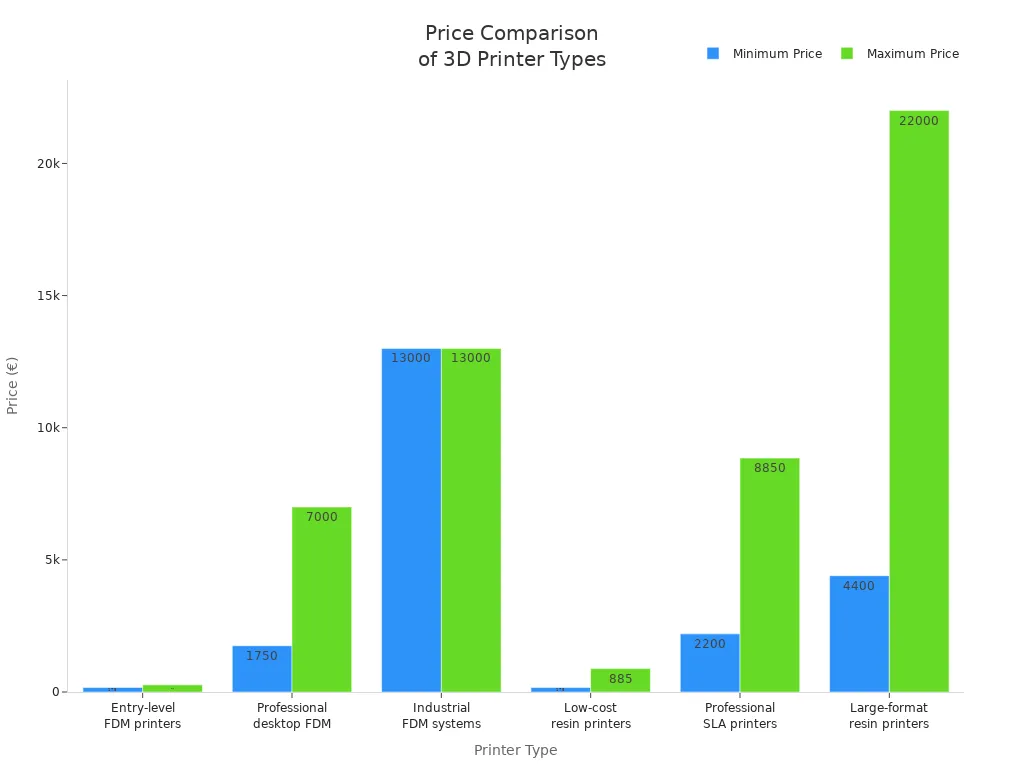
When you compare the costs of 3d printers, you notice a clear difference between resin and fdm models. Entry-level fdm printers remain the most affordable, making them ideal for beginners or those on a budget. Professional desktop fdm machines and industrial systems can cost much more, but they offer advanced features and larger build volumes. Resin printers, especially low-cost models, start at a similar price to entry-level fdm printers. However, professional SLA and large-format resin printers can become significantly more expensive.
|
Printer Type |
|
|---|---|
|
Entry-level FDM printers |
175–270 |
|
Professional desktop FDM |
1750–7000 |
|
Industrial FDM systems |
13000+ |
|
Low-cost resin printers |
175–885 |
|
Professional SLA printers |
2200–8850 |
|
Large-format resin printers |
4400–22000 |
Material costs also differ. Fdm filaments, such as PLA or ABS, are widely available and affordable. You can experiment with different materials without a large investment. Resin, on the other hand, costs more per litre and requires careful storage. If you plan to print frequently or in large volumes, fdm offers better long-term value.
Maintenance and Consumables
You must consider ongoing maintenance and consumable costs when choosing between resin and fdm 3d printing. Fdm printers require minimal upkeep. You mainly replace nozzles or clean the build plate. Waste is limited to support materials, and the cleanup process is straightforward.
Resin 3d printing demands more attention. You need to handle liquid resin with care, wear nitrile gloves, and use eye protection. Proper ventilation is essential in your workspace. After each print, you must clean tools thoroughly and dispose of waste resin responsibly. The process can become messy, and you should always follow safety guidelines.
|
Printer Type |
Maintenance Issues |
Cleanup Requirements |
|---|---|---|
|
Resin |
Requires careful handling of liquid resin, thorough cleaning of tools, and proper disposal of waste resin |
Messy cleanup, requires gloves and eye protection |
|
FDM |
Minimal waste beyond support materials, simpler cleanup |
Relatively clean, easier to manage |
-
You must wear gloves and eye protection when handling uncured resin.
-
Always ensure proper ventilation in your 3d printing area.
-
Dispose of resin waste and cleaning materials safely.
Fdm 3d printers offer a cleaner, more user-friendly experience with lower ongoing costs. Resin 3d printing provides high detail but requires more investment in consumables and safety equipment.
3D Printing Speed and Efficiency
Resin vs FDM Print Times
Speed plays a crucial role when you select a 3d printer for your project. You often find that fdm and resin printers deliver different results in terms of print times. For a standard-sized model, such as a 100mm cube, fdm printers usually complete the job in 2 to 3 hours. If you choose resin, you might print a 50mm figurine in 1 to 2 hours. The following table highlights these differences:
|
Printer Type |
Object Size |
Average Print Speed |
|---|---|---|
|
FDM |
100mm cube |
2-3 hours |
|
Resin |
50mm figurine |
1-2 hours |
You notice that fdm excels with larger objects, while resin offers faster results for small, detailed prints. The layer-by-layer approach in filament 3d printing means that taller models take longer, but you can adjust layer height to balance speed and quality. Resin printers cure each layer at once, so the print time depends more on the height than the number of objects on the build plate.
Best Use Cases by Speed
When you consider efficiency, the way each technology handles multiple objects becomes important. Resin printers allow you to print several small parts at the same time without increasing the total print time. In contrast, filament 3d printing processes each object sequentially, which increases the overall time for batch jobs. The table below summarises this difference:
|
Printing Technology |
|
|---|---|
|
Resin |
High - prints multiple small parts simultaneously |
|
FDM |
Low - prints objects sequentially, increasing time |
You should choose filament 3d printing if you need a single large prototype or functional part quickly. For batch production of miniatures or detailed components, resin printing gives you a clear advantage. If you work in education or rapid prototyping, fdm provides reliable speed for one-off models. In jewellery or dental labs, resin 3d printing supports efficient production of many intricate pieces at once.
Tip: For time-sensitive projects, match your printer choice to the object size and quantity. Fdm suits large, single prints. Resin excels with batches of small, detailed items.
Ease of Use and Safety
User-Friendliness
You encounter distinct differences in user-friendliness when you compare resin and FDM 3d printers. FDM technology offers a gentle learning curve. You set up the printer, load filament, and start printing with minimal fuss. Beginners often prefer FDM because the workflow remains straightforward. You spend less time on calibration and maintenance. Resin 3d printing demands more attention. You must handle liquid resin, calibrate the build plate, and manage post-processing steps like washing and curing. If you invest time in learning resin techniques, you achieve higher detail and surface quality.
-
FDM suits newcomers with its simple workflow.
-
Resin printing challenges you with complex handling and post-processing.
-
You gain superior results with resin if you master its process.
The factors affecting ease of use for resin printers include application, physical properties, experience level, budget, and printer compatibility. The table below summarises these considerations:
|
Factor |
Description |
|---|---|
|
Application |
The intended use of the printed object influences the choice of resin, affecting ease of use. |
|
Physical Properties |
Required characteristics like strength and flexibility can complicate the selection process. |
|
Experience Level |
Beginners may find standard resins easier to use compared to technical resins that require expertise. |
|
Budget |
The cost of resin can impact accessibility and ease of use for different users. |
|
Printer Compatibility |
Ensuring resin compatibility with the printer is crucial for successful printing. |
Tip: If you want a hassle-free start in 3d printing, FDM gives you the best entry point. Resin rewards patience and skill with exceptional results.
Safety and Messiness
Safety remains a critical concern in 3d printing. You must protect yourself from hazards associated with both resin and FDM materials. Resin in its liquid state poses risks. You may experience skin allergies, headaches, or nausea. Always wear gloves, goggles, and a mask when handling resin. FDM filaments emit ultra-fine particles and volatile organic compounds. ABS can irritate your respiratory system, while PLA produces fewer emissions.
|
Material Type |
Safety Concerns |
|---|---|
|
Resin |
Toxic in liquid state, can cause skin allergies, headaches, nausea, and requires protective gear (gloves, goggles, masks). |
|
FDM Filaments |
Emission of ultra-fine particles and VOCs, potential respiratory irritation, and differences in toxicity between materials (e.g., ABS vs. PLA). |
You must clean up carefully after resin printing. Spills and uncured resin create messes that require proper disposal. FDM printing produces less mess. You remove supports and sweep away filament scraps with ease. Good ventilation and protective equipment improve safety for both methods.
Note: You ensure a safe 3d printing environment by following manufacturer guidelines and using protective gear.
Post-Processing: Resin vs FDM
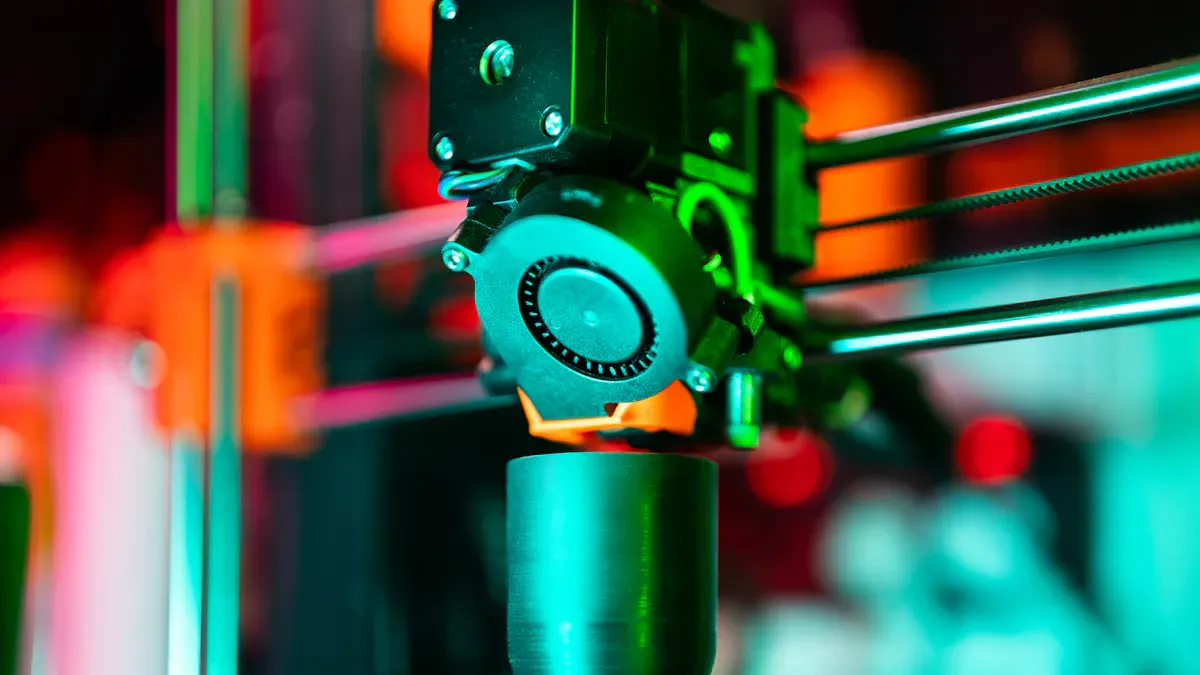
Post-processing is a crucial stage in 3d printing. The steps you follow after the print finishes can affect the final quality and usability of your model. Both resin and fdm technologies require some post-processing, but the workflow and time commitment differ.
Cleaning and Curing Resin Prints
When you use resin 3d printing, you must handle several post-processing steps to achieve a finished part. After you remove the print from the build plate, you need to wash it in isopropyl alcohol. This step removes any uncured resin from the surface. You then cure the print under UV light to harden the material fully. This process can take 15–30 minutes, depending on the size and geometry of your model. You also need to remove support structures and may choose to sand away any marks for a smoother finish.
Here is a typical workflow for resin post-processing:
-
Remove the print from the build plate.
-
Wash the print in isopropyl alcohol.
-
Cure the print under UV light.
-
Remove support structures.
-
Sand support marks if needed.
Note: Resin post-processing adds extra time and requires careful handling, but it ensures your 3d models reach their best quality.
Removing Supports from FDM Prints
Fdm printing offers a simpler post-processing routine. Once your 3d print cools, you can remove it from the build plate. You then detach any support structures, which can sometimes be slow if the model has complex geometry. Minimal cleaning is required, but you may choose to sand rough areas or use surface finishing techniques for a smoother result. Most fdm parts are ready to use immediately after cooling, making this method efficient for rapid prototyping.
The table below compares the typical post-processing steps for both methods:
|
Process Step |
Resin 3D Prints |
FDM 3D Prints |
|---|---|---|
|
Washing |
Required (isopropyl alcohol) |
Not required |
|
Curing |
Required (UV light) |
Not required |
|
Support Removal |
Required |
Required |
|
Surface Finishing |
Optional sanding |
Optional sanding |
You should consider the post-processing demands when choosing between resin and fdm. Resin delivers high detail but needs more time and care. Fdm provides a faster, cleaner workflow for most 3d printing projects.
Applications: Which to Choose?
Choosing between resin vs fdm depends on your project’s requirements and the specific applications you have in mind. Each technology offers unique advantages and disadvantages, making them suitable for different types of prototypes, models, and end-use parts. Understanding the strengths of resin printers and fdm printing helps you select the right tool for your intended applications and use cases.
Best Projects for Resin
You achieve the highest level of detail and surface finish with resin printers. These machines excel in applications where accuracy and intricate features matter most. If your work demands smooth surfaces and fine details, resin and sla printing provide unmatched results. Typical projects that benefit from resin include:
-
Dental and medical models, where precision is critical for patient-specific applications.
-
Jewellery design, allowing you to create ultra-fine prototypes and master patterns for casting.
-
Miniatures, such as tabletop gaming figures or collectible models, which require sharp details.
-
Artistic models, including sculptures and display pieces that showcase complex geometry.
-
Detailed prototypes for engineering or product design, where visual fidelity is essential.
Resin printers deliver exceptional results in these applications, especially when you need to impress clients or stakeholders with high-quality prototypes. You also find resin and sla printing widely used in industries that prioritise accuracy and surface finish.
|
Application Description |
|
|---|---|
|
Dental |
Used for orthodontics, restorations, and implants, with top manufacturers printing over 700,000 models daily. |
|
Jewellery |
Produces precise moulds for lost-wax casting, allowing designers to create ultra-high detail pieces in-house. |
|
Engineering |
Ideal for functional prototypes, enabling quick production compared to outsourcing. |
|
Architecture |
Used for creating detailed models and figurines. |
|
Medical |
Applications include prototypes for prosthetics and biocompatible models. |
Note: You should consider resin vs fdm carefully if your applications demand high accuracy, smooth finishes, or intricate features. Resin and sla printing offer clear advantages in these scenarios, but you must also account for the disadvantages, such as increased post-processing and material costs.
Best Projects for FDM
Fdm printing stands out when you need robust, functional prototypes and end-use parts. You benefit from a wide variety of materials, including PLA, ABS, PETG, and advanced options like carbon fibre-infused PETG. These materials provide strength, flexibility, and resistance to temperature or chemicals, making fdm ideal for demanding applications.
Projects best suited for fdm include:
-
Strong, functional prototypes that must withstand mechanical stress or repeated use.
-
Parts for aerospace, automotive, and medical industries, where reliability and durability are essential.
-
Consumer goods, such as custom tools, fixtures, or replacement components.
-
Educational models and teaching aids, where cost-effectiveness and ease of use matter.
-
Large-scale models or prototypes, as filament printers support bigger build volumes.
You find fdm printing especially valuable when you need to iterate quickly, test mechanical properties, or produce parts in-house. The versatility of fdm materials supports a broad range of applications and use cases, from rapid prototyping to small-batch manufacturing.
Tip: If you prioritise speed, material variety, and mechanical strength, fdm printing offers significant advantages. You also enjoy lower costs and simpler workflows compared to resin and sla printing.
User Profiles
Your background and goals influence your choice between resin vs fdm. Different user profiles gravitate towards one technology based on their unique needs and the typical applications they encounter.
|
Preferred Printer Type |
Reason for Preference |
|
|---|---|---|
|
Hobbyists |
FDM |
Affordability and ease of use for prototyping. |
|
Professionals |
SLA |
Higher detail and accuracy for intricate designs. |
|
Educators |
FDM |
Practicality and cost-effectiveness for teaching purposes. |
Hobbyists often choose fdm printing for its affordability and straightforward operation. You can experiment with a range of materials and applications without a steep learning curve. Professionals, such as engineers or designers, prefer resin and sla printing when their work requires high detail and accuracy. Educators rely on fdm for classroom projects, demonstrations, and hands-on learning due to its practicality and low running costs.
When you evaluate resin vs fdm, consider the most common decision factors:
-
Material properties, such as strength, flexibility, and resistance to heat or chemicals.
-
Accuracy and resolution, with resin printers offering higher detail and smoother finishes.
-
Speed and efficiency, which affect your workflow and project timelines.
-
Cost, including initial investment, materials, maintenance, and post-processing.
-
Complexity of use, as resin printers require more post-processing and are less beginner-friendly.
-
Intended application, whether you need functional prototypes or high-detail models.
You should match your choice to your primary applications and use cases. Resin and sla printing shine in high-precision, visually demanding projects. Fdm printing delivers versatility, strength, and cost savings for a wide range of prototypes and end-use parts.
Callout: The right 3d printing technology depends on your priorities. Weigh the advantages and disadvantages of resin vs fdm against your project’s requirements, user profile, and the specific applications you plan to tackle.
You must weigh the strengths and weaknesses of each technology before choosing your 3d printing solution.
|
FDM (Filament) |
Resin (SLA/DLP/LCD) |
|
|---|---|---|
|
Ease of Use |
Beginner-friendly |
Complex, needs post-processing |
|
Cost |
Lower, recyclable materials |
Higher, not recyclable |
|
Print Quality |
Good, robust parts |
Superior detail, less durable |
|
Safety |
Safer, less mess |
Needs careful handling |
You should identify your main application, test machines if possible, and seek training. Many users believe resin printing is simple and clean, but it often proves messy and requires strict safety. If sustainability matters, FDM offers a greener choice.
Still unsure? Visit a fablab or service provider to gain hands-on experience before investing.
FAQ
What is the main advantage of resin 3D printing?
You achieve superior detail and a smooth surface finish with resin printers. This technology suits projects that require intricate features, such as miniatures or dental models.
Can you use FDM printers for functional parts?
Yes. You can produce strong, durable parts with FDM printers. These machines work well for prototypes, tools, and components that must withstand mechanical stress.
Is resin printing safe for home use?
You must follow strict safety guidelines. Always wear gloves and goggles. Ensure good ventilation. Handle and dispose of resin carefully to avoid health risks.
How do material costs compare between resin and FDM?
FDM filament costs less than resin. You find a wider range of affordable materials for FDM. Resin requires more investment, especially for frequent or large-scale printing.
Which printer type is best for beginners?
You find FDM printers easier to set up and operate. The workflow remains straightforward. Resin printers demand more skill and attention to safety.
Share:
Comparing 3D Printing and CNC Machining for Modern Production Needs
How to Fix Warping in 3D Printing