
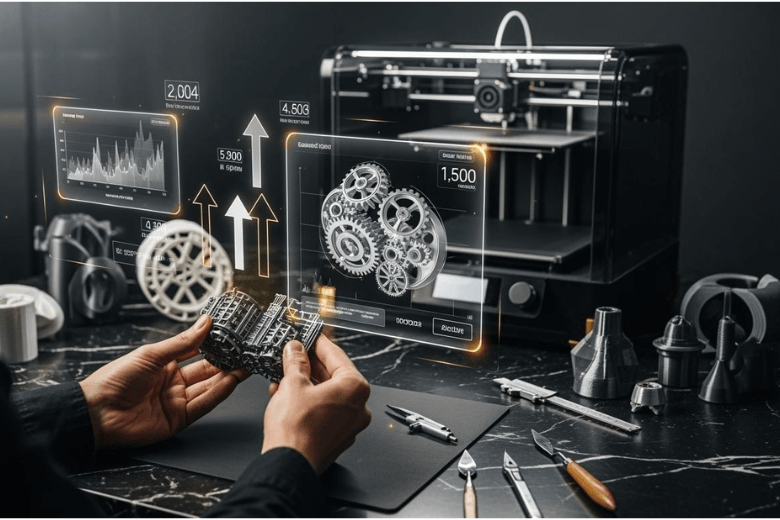
Market predictions for 2026 say 3D printing will grow a lot. Experts say 2026 will focus on making more things in factories. Software will help make things more exact. New materials will be used. Companies will use more automation and AI in 2026. This will make products better and cheaper. Using many materials and faster methods will help new ideas. In 2026, making things in different places will make supply chains quicker. More people with skills will be needed in 2026. Companies want workers who know both old and new ways of making things. Smart spending will still be very important in 2026. Science about materials and green choices will be important in 2026. Is 3D Printing Growing in 2026? The answer is yes.
Key Takeaways
-
3D printing will grow a lot in 2026. The market is expected to rise by 21.9%. More industries will start using additive manufacturing. This will create new jobs for skilled workers. Automation and AI will help make production better. These tools will lower costs and improve quality. Localised manufacturing will make supply chains simpler. This will make production quicker and more eco-friendly. Training for new technology will be very important. Workers will need this to do well in the changing 3D printing world.
Is 3D Printing Growing in 2026
Market Expansion
Many businesses want to know if 3D printing is growing in 2026. Experts say there will be strong demand and steady growth. The additive manufacturing market will get better as the economy improves. Many OEMs say customers want more products. They think things will start to get better in 2026. Interest rates may go down, so companies will spend more money. This is like what happened after the Covid lockdowns.
Connery says there is still a lot of demand, especially for Industrial systems. OEMs see many customers are interested. The industry will get better when the economy improves. Experts think things will start to recover in 2026. Lower interest rates will help companies spend more money. This is like the growth after the Covid lockdowns.
The market should keep growing fast in 2026. This is good news for people in the industry. The 3D printing industry is expected to grow by 21.9% in 2026. Latin America, the Middle East, and Africa will grow even faster, at 24.1%. The Asia-Pacific region is growing the most, with a rate of 19.8%. This is higher than the 9% growth in Europe and the Americas. Chinese companies are helping the market grow, especially in desktop 3D printing.
-
The 2026 market outlook shows:
-
Strong demand for additive solutions.
-
More money spent by companies.
-
Fast growth rates.
-
Asia-Pacific leading the way.
-
Latin America, Middle East, and Africa growing quickly.
-
The additive manufacturing market will reach new levels. The global 3D printing industry could grow by 155%, reaching $40.8 billion by 2024. This means big companies are investing more money. Companies like HP and General Electric have filed many patents. They want to make additive technologies better. The market will see more new ideas and more demand for solutions.
Mainstream Adoption
Is 3D printing growing in 2026? The answer is yes. The market shows that more people are using it. Many industries use additive manufacturing for real jobs. Car companies made over 25% of the world’s revenue in 2024. Healthcare is growing fast, with a 17.5% growth rate expected until 2029. Aerospace uses additive manufacturing for light parts and tools. The construction industry is starting to print walls and building parts.
|
Sector |
Adoption Rate/Notes |
|---|---|
|
Automotive |
|
|
Healthcare |
Growing fast, with about 17.5% growth until 2029. |
|
Aerospace |
Uses 3D printing for light parts and tools. |
|
Construction |
Starting to print walls and building parts. |
The market needs more additive solutions. Companies are buying new technology and using more 3D printing. Soon, more businesses will use additive manufacturing. The industry is growing because more people want it. As more industries use additive methods, the market gets bigger. There are more jobs for people with the right skills. The industry needs workers who know both old and new ways to make things. Soon, there will be more investment and use of 3D printing. The market will keep growing in 2026.
Near-term trends include:
-
More industries using additive manufacturing.
-
More jobs for skilled workers.
-
More money spent on additive technology.
-
Real uses in cars, healthcare, aerospace, and construction.
-
Market growth from new ideas and demand.
Is 3D printing growing in 2026? The market has strong demand, steady growth, and more people using it. Trends show the market will keep getting bigger. The industry will see more money, new ideas, and real uses. Additive manufacturing will help shape the future of making things.
3D Printing Market Trends in 2026
Metal 3D Printing Growth
The market in 2026 is seeing strong growth in metal 3D printing. Many companies now use metal systems to make parts for factories, cars, and planes. Metal Powder Bed Fusion systems had a 25% rise in shipments all over the world. Chinese vendors led with a 35% increase, helping local aerospace and private space companies. Western aerospace and defence customers also bought more metal systems, but not as quickly. The additive manufacturing industry thinks growth will be even stronger in 2026 as more people want metal parts.
-
Metal 3D printing helps make tricky parts for planes, like exhaust pieces. These parts now last ten times longer than before.
-
Car makers use metal 3D printing to save time. For example, they cut the time to make automotive uprights from four days to four hours.
-
Heavy machinery companies use metal 3D printing to make their machines work better and last longer.
More companies use advanced alloys and high-performance polymers because additive manufacturing is becoming more common. This trend helps move production into the mainstream.
Defence and Aerospace Applications
In 2026, defence and aerospace are big reasons for market growth. Additive manufacturing lets these industries make lighter parts with tricky shapes. These parts help planes work better and use less fuel. QinetiQ flew a plane with a 3D-printed part made from recycled titanium, showing how the industry can use green materials. The U.S. military signed a deal with Nikon AM Synergy to update supply chains and make important aircraft parts faster.
-
Aerospace companies use additive manufacturing to make parts that were too hard to make before.
-
Defence companies use recycled materials and new ways of making things to meet strict rules.
Industry Consolidation
The 3D printing industry in 2026 has many mergers and acquisitions. This trend changes the market and brings new ideas. Nano Dimension bought Markforged, making it a leader in additive manufacturing. Tethon 3D got important patents from Fortify, including ones for advanced material processing and anisotropic composite structures. These deals help companies make better products and compete around the world.
-
Mergers and acquisitions make the market more competitive.
-
New technologies, like low-cost full-colour material jetting printers, come from these moves.
-
The additive manufacturing industry thinks there will be more consolidation as companies try to get stronger.
The market in 2026 gets better from more industrial use, new materials, and automation. Companies make things closer to home and use digital inventories to make supply chains stronger.
Materials and Technology Innovation
Multi-Material Printing
In 2026, multi-material printing is growing quickly. Meshy made a system that fixes designs and helps with additive manufacturing. This system suggests materials, finishes, and print settings for each model. Designers can make parts ready for production without needing CAD skills. This new idea helps more people use additive manufacturing. It also makes the process faster and easier. Multi-material printing lets makers use different materials in one product. This helps create new business ideas and supports using better materials. Automation means companies spend less on workers and make things faster. When more products are made, each one costs less. This makes multi-material printing cheaper for everyone.
|
Description |
|
|---|---|
|
Material Innovation |
New materials may cost more at first but work better and save energy. |
|
Printer Advancements |
Better printers cost more at first but save money later. |
|
Automation |
Automation means fewer workers and faster production. |
|
Economies of Scale |
Making more products lowers the price for each one. |
Advanced Polymers and Engineering Filaments
In 2026, better materials are used more often. Additive manufacturing uses advanced polymers and special filaments to make strong parts. Aether made RapidPrint, a fast way to print with polymer filaments. RapidPrint PA6 CF10 ABX has carbon fibre and works with many printers. It gives smooth finishes. Polymaker now sells its products in six European countries. This makes it easier to buy advanced polymers. Farsoon Technologies works with Advanced Laser Materials. This helps more printers use different materials. The market uses polymers like PEEK, PEKK, ULTEM, and conductive filaments. These materials help make things greener and support digital manufacturing.
|
Characteristics |
Applications |
|
|---|---|---|
|
PEEK |
Strong like steel, much lighter, resists heat |
Planes, cars, medical tools |
|
PEKK |
Very stiff, handles high heat |
Planes, factories |
|
ULTEM (PEI) |
Costs less, strong and tough |
Electronics, cars, medical uses |
|
Conductive Filaments |
Used for special electrodes |
Electrochemical jobs |
Home 3D Printer Improvements
In 2026, home 3D printers get better. New printers have automatic bed levelling, so setup is easy. Many come partly built, so setup takes about 20 minutes. Sensors check and fix the bed, so users do not need to know much. Home printers now make smooth parts and help hobbyists and small businesses. These changes help more people use digital manufacturing. Home printers use materials that are better for the planet.
-
Automatic bed levelling makes setup simple.
-
Partly built printers save time.
-
Sensors do the hard work, so users need less skill.
In 2026, new materials, technology, and automation help the market grow. Better materials, faster machines, and easier home printers make production better. The industry cares about the planet and digital manufacturing. This makes additive manufacturing easier and more useful for everyone.
Automation, AI, and Application Shift
Automated Workflows
In 2026, automation and AI are very important in additive manufacturing. Companies use automated workflows to make things more reliable and have fewer mistakes. MIRA3D helps by getting builds ready and changing supports for each part and material. Tools now change support shapes and tell you if walls are too thin. Traceability tools follow parts from design to making, which helps check quality and who did what. AMIS Runtime does all the build steps, like importing, slicing, and exporting parts. This system is good for big companies and service providers. Automation helps pack parts better, makes fewer mistakes, and gives the same results every time. Users can choose how to nest parts by size or business rules, so packing is smarter. These new tools make each part cheaper and help companies know what they will spend. Tests at factories show automation gives better quality and saves money.
In 2026, people see automation as a way to work faster and spend less. Blue-White Industries uses machines to finish parts, which saves time and makes more products. This shows the market cares about working well and growing.
AI in Design and Quality
AI is very important in additive manufacturing in 2026. It helps with design jobs and makes models better and more useful. AI finds mistakes in 3D models, so printing does not fail. Generative design lets AI make tricky shapes that work better. AI checks many designs quickly, so new products take less time. Automatic quality checks save time and make sure parts are always good. AI looks at parts for problems and finds them fast and well.
|
Measurable Benefit |
Description |
|---|---|
|
Enhanced Production Efficiency |
AI lets 3D printing change in real time and stay on track. |
|
Compliance Assurance |
AI makes sure rules are followed with automatic workflows. |
|
Scalability and Reliability |
AI makes additive manufacturing steady and easy to grow. |
From Innovation to Application
In 2026, 3D printing is used for real products, not just testing ideas. The market now sees additive manufacturing as a way to make things, not only for quick samples. Automation and AI help designers make better parts and work faster. Healthcare uses bioprinting to make implants for each patient. Being green is important, so more companies use biodegradable materials and recycle. Making things close to where they are needed saves money and works better. New government plans help small businesses join bigger groups. The market also uses on-demand production, which changes supply chains and helps the planet. Better quality checks make sure products are safe as more people use this technology.
In 2026, additive manufacturing grows because of automation, AI, and making real products. The industry now cares about working well, being green, and making things people need.
Supply Chain and Workforce Impact
Localised Manufacturing
In 2026, factories start making things closer to people. The 3D printing industry leads this big change. Additive manufacturing helps factories make products near where they are needed. This brings many good things for the market and industry.
-
It is now quicker and easier to design and test ideas.
-
Companies keep track of their stock better, so supply chains work well.
-
Making things only when needed means there is less waste.
-
Factories can change what they make very fast.
Distributed manufacturing gives factories more choices. They can make special products for people nearby. This means less waiting and less waste. The market gets bigger as companies use additive methods to meet new needs. In 2026, additive manufacturing lets people change designs and test them quickly. Companies make things when people ask for them, which is better for the planet and cuts down on waste. These changes help companies save money and give better service.
-
Factories can change designs in new ways.
-
Testing ideas is much faster now.
-
Special products get to people quickly, with less waste and waiting.
In 2026, companies that use distributed manufacturing do well. Additive manufacturing helps the industry keep up with what people want and what is happening in the world.
Workforce Evolution
In 2026, workers need new skills. Additive manufacturing changes how people do their jobs. Workers learn to use computers and run machines that work by themselves. There are new jobs in design, running machines, and checking quality. Old jobs change as additive methods become normal.
More people work in small local places because of distributed manufacturing. The industry likes workers who know both old and new ways to make things. Training programmes teach people how to use additive manufacturing. In 2026, people who learn new skills do well. Companies spend money on teaching workers to keep up with changes.
Additive manufacturing changes jobs and the market. In 2026, the industry grows with new jobs, better training, and more digital skills.
The 3D printing market in 2026 is growing fast. Additive manufacturing is now important in many areas. The industry has some problems to solve. These include how materials act, stress inside parts, and slow rule changes.
-
Moving things and fixing them is still hard.
-
Rules for checking quality are not as quick as new technology.
There are also chances for new business as additive solutions are used for more than just testing ideas.
-
People see new ways to grow at events like the ASI Show pavilion.
-
Architects and designers can use big printers for very exact work.
Making things in factories, using machines, and AI will change the market. Companies need to spend money on training and working with others to be leaders. In 2026, the market is ready for making things in a greener and more trusted way.
FAQ
What makes 2026 important for additive manufacturing?
2026 is a big year for additive manufacturing. Many industries want to use more additive solutions. Companies buy new machines and materials. They hope to make products faster and cheaper. The market expects strong growth in 2026.
How does additive help factories in 2026?
Factories use additive to make parts quickly. In 2026, they can change designs fast. Additive lets them test ideas and fix problems. They waste less material. Many factories use additive manufacturing to meet customer needs in 2026.
Which industries use additive the most in 2026?
Car makers, aerospace, and healthcare use additive the most in 2026. They make light parts and special tools. Construction companies also use additive for building parts. Many sectors see the value of additive manufacturing in 2026.
Will 2026 see more jobs in additive?
Yes, 2026 brings more jobs in additive. Workers learn to use new machines. They design parts and check quality. Additive manufacturing creates roles in factories and small businesses. Training helps people get ready for these jobs in 2026.
How does additive support green goals in 2026?
Additive helps companies use less material. In 2026, many use recycled powders and filaments. Additive manufacturing supports local production. This means less transport and waste. Companies choose greener options with additive in 2026.
Share:
What Can You Actually Do With a 3D Printer
Who Should Buy a 3D Printer in 2026