
Blog
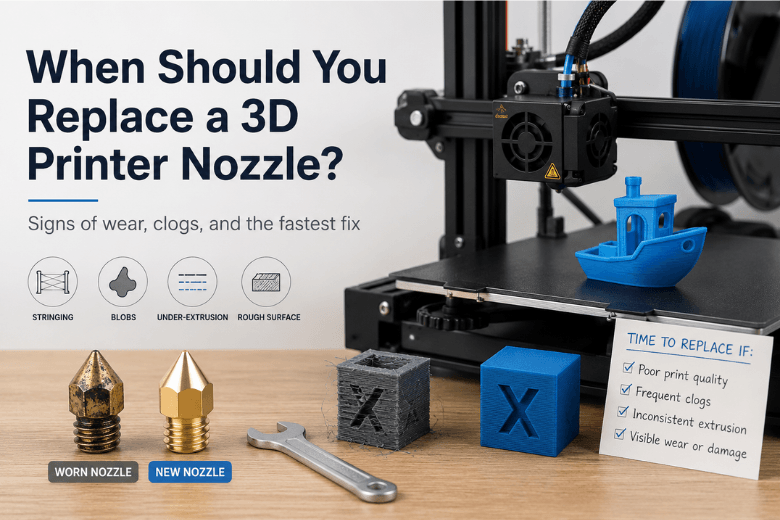
Replace 3D Printer Nozzle: When to Do It (and When Not To)
Nozzle wear can cause stringing, blobs, rough surfaces, under-extrusion, and unstable first layers. This guide explains how to tell the difference between a worn nozzle, a clog, and calibration issues, when cleaning is enough, and when replacing the nozzle is the fastest fix. It also covers brass vs hardened steel nozzles, safe replacement steps, and simple maintenance tips for makerspaces or frequent 3D printer users.
Read moreabout Replace 3D Printer Nozzle: When to Do It (and When Not To)
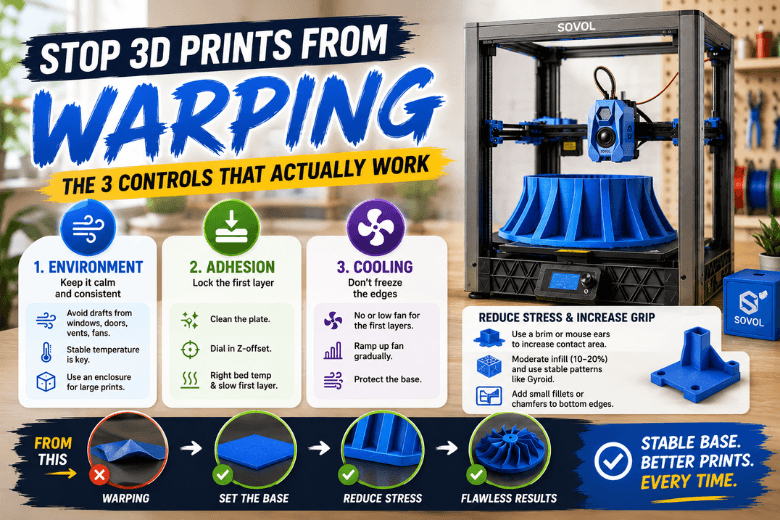
How to Stop 3D Prints from Warping on Large Models
This article explains why large 3D prints warp and how to prevent corners from lifting during long print jobs. It breaks warping down into three key controls: stable environment, strong first-layer adhesion, and smart cooling. The guide also covers practical fixes such as avoiding drafts, cleaning the build plate, setting Z-offset correctly, delaying fan cooling, using brims or mouse ears, and reducing internal stress with better infill and base-friendly geometry. It is especially useful for UK makerspaces, school labs, and anyone printing large PLA, PETG, ABS, or ASA models.
Read moreabout How to Stop 3D Prints from Warping on Large Models
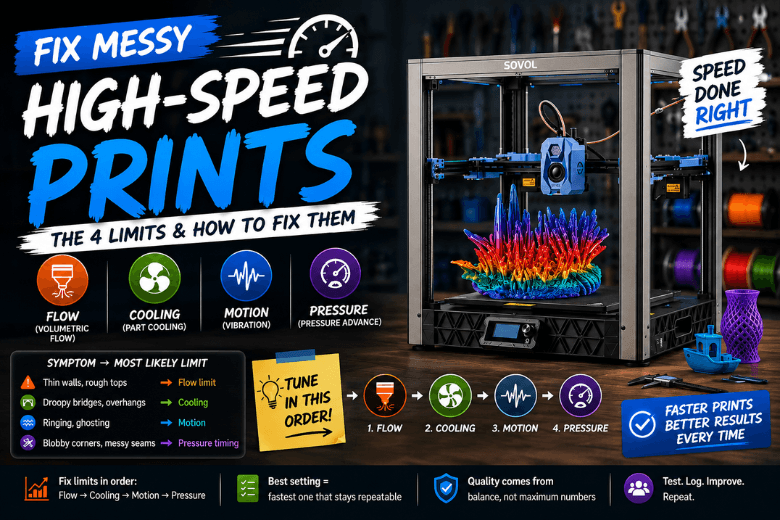
Why Sovol 3D printers make messy prints at high speed (and how to fix it)
This article explains why high-speed 3D prints can become messy and how to diagnose the real cause instead of tuning randomly. It breaks the problem into four key limits: volumetric flow, cooling, motion/vibration, and extrusion pressure timing. The guide recommends fixing issues in order—flow first, then cooling, input shaping, and pressure advance—so users can achieve faster, cleaner, and more repeatable prints on Sovol 3D printers.
Read moreabout Why Sovol 3D printers make messy prints at high speed (and how to fix it)
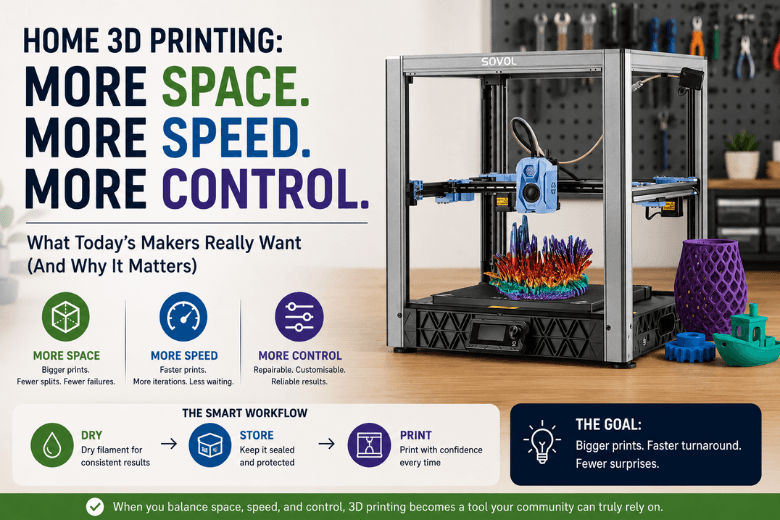
The rise of home 3D printing: why makers want more space, speed and control
This article explores why today’s home 3D printing users and maker communities are asking for more space, more speed, and more control. It explains how larger build volumes reduce split prints and assembly work, why faster motion systems only matter when quality stays reliable, and how repairability, firmware access, standardised profiles, and local support help communities reduce downtime. The guide also highlights practical UK makerspace concerns such as noise, ventilation, humidity, filament handling, and maintenance.
Read moreabout The rise of home 3D printing: why makers want more space, speed and control
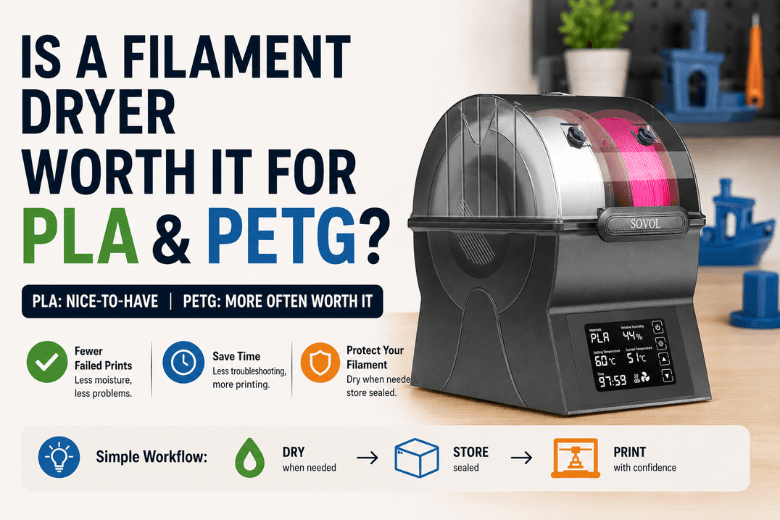
Is a Filament Dryer Worth It for PLA and PETG?
This guide explains whether a filament dryer is worth it for PLA and PETG users, especially in makerspaces, school labs, and shared 3D printing spaces. It compares dry boxes, filament dryers, food dehydrators, and ovens, while explaining how moisture causes stringing, popping, bubbles, rough surfaces, and inconsistent extrusion. The article also provides practical drying temperature baselines for PLA and PETG, plus a simple dry → store → print workflow to reduce failed prints and troubleshooting time.
Read moreabout Is a Filament Dryer Worth It for PLA and PETG?
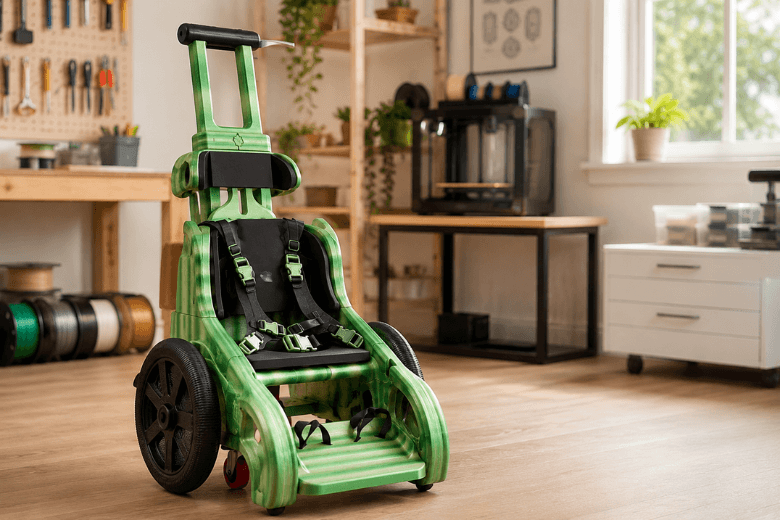
A UK maker used Sovol Gradient Green PETG filament to print a toddler mobility trainer for a young boy. This story shows how reliable PETG filament can support large functional prints, community projects, and meaningful real-world 3D printing applications.
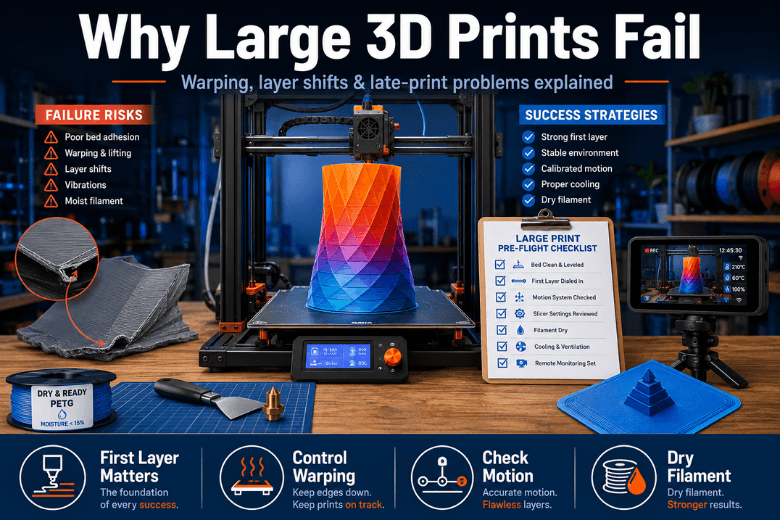
Why large 3D prints fail more often than small prints
This guide explains why large 3D prints are more likely to fail, especially during long overnight jobs. It covers the most common causes, including poor first-layer adhesion, warping, layer shifts, heat creep, nozzle collisions, vibration, cable drag and moist filament. The article also provides a practical fix order and a 15-minute pre-flight checklist to help makerspaces and 3D printer users improve reliability before starting large-format prints.
Read moreabout Why large 3D prints fail more often than small prints
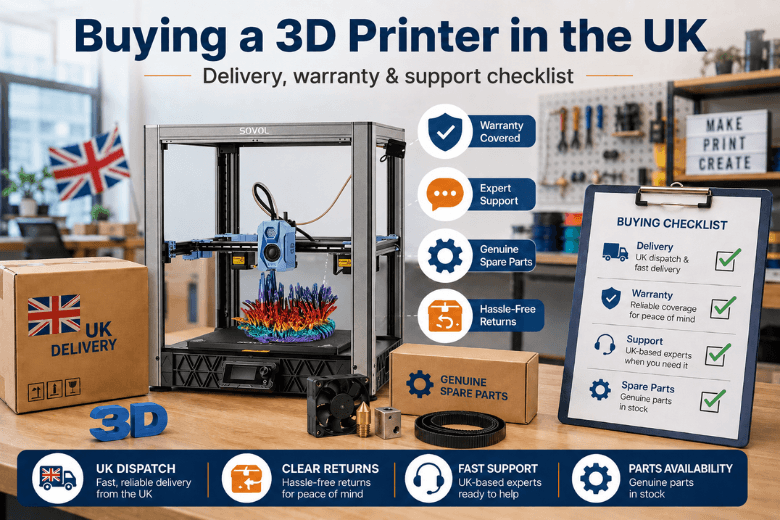
Buying a 3D Printer in the UK: Delivery, Warranty and Support Explained
This guide helps UK buyers and makerspaces compare 3D printer brands beyond headline specs. It explains what to check before buying, including UK warehouse dispatch, delivery timelines, split shipments, return policies, warranty coverage, support response times and spare parts availability. The article also highlights the risks of overseas shipping, customs fees and unclear after-sales processes, helping buyers avoid delays, hidden costs and long downtime after purchase.
Read moreabout Buying a 3D Printer in the UK: Delivery, Warranty and Support Explained
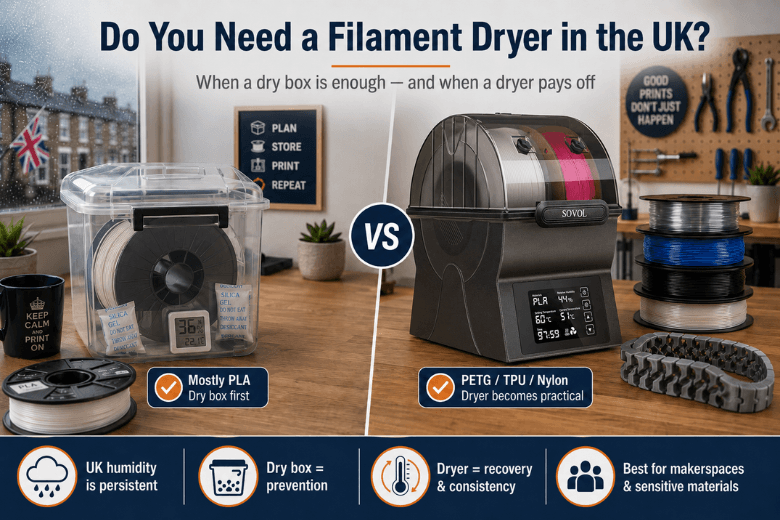
Do You Really Need a Filament Dryer in the UK?
This guide explains whether UK 3D printer users really need a filament dryer, based on material type, storage habits, workspace conditions and failure cost. It shows why a dry box with desiccant is often enough for PLA, while PETG, TPU and nylon users may benefit more from active drying. The article also compares dry box prevention with dryer recovery, helping home users and makerspaces reduce wet-filament issues, failed prints and unnecessary troubleshooting.
Read moreabout Do You Really Need a Filament Dryer in the UK?