
Blog
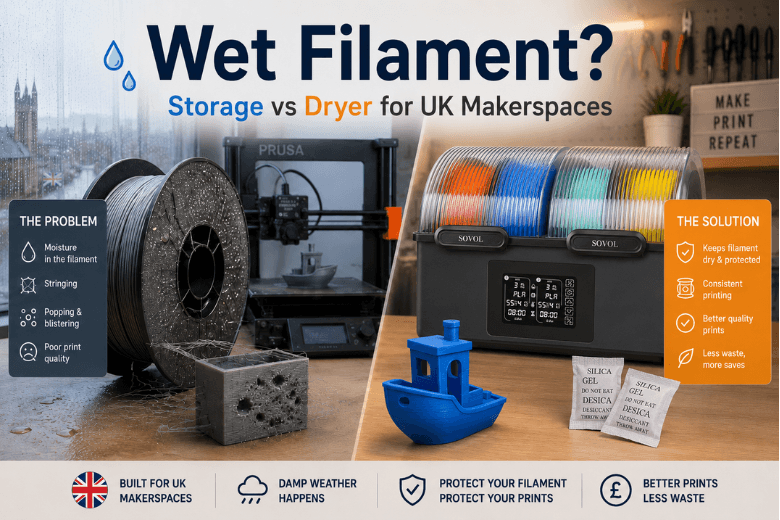
Wet Filament in the UK: Why Weather Ruins 3D Printer Filament
This guide explains how UK humidity and everyday indoor moisture can affect 3D printer filament, causing stringing, popping, bubbles, brittle parts and poor print quality. It compares sealed filament storage, desiccant boxes and active filament dryers, helping UK makerspaces decide when simple storage is enough and when a dryer becomes the better choice. The article also gives practical checks, drying workflow tips and a low-drama process for keeping shared filament reliable.
Read moreabout Wet Filament in the UK: Why Weather Ruins 3D Printer Filament
- 0 commentson CoreXY vs Bed-Slinger (CoreXY vs Bed Slinger): Which 3D Printer Should You Buy in 2026?
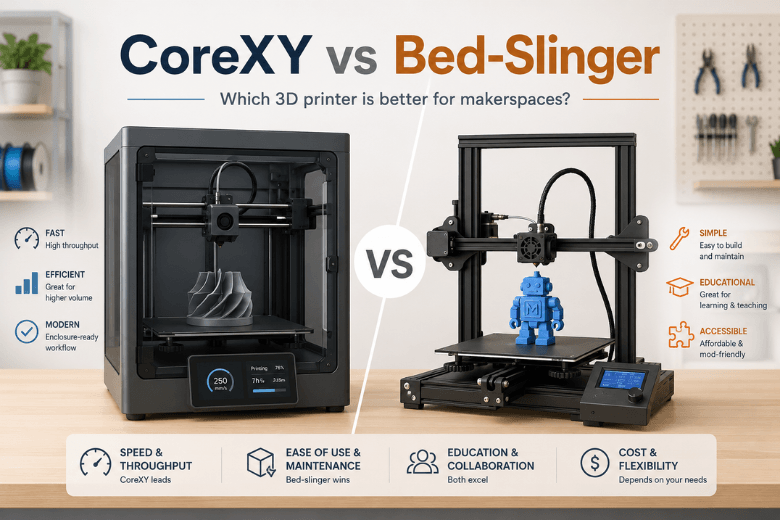
CoreXY vs Bed-Slinger (CoreXY vs Bed Slinger): Which 3D Printer Should You Buy in 2026?
This guide compares CoreXY and bed-slinger 3D printers for makerspaces, schools and shared printer fleets. It explains why CoreXY machines are often better for speed, throughput and enclosure-friendly workflows, while bed-slingers remain useful for teaching, simple maintenance and lower-cost operation. The article helps buyers make a practical decision based on uptime, novice usability, parts support and real printing needs rather than headline speed alone.
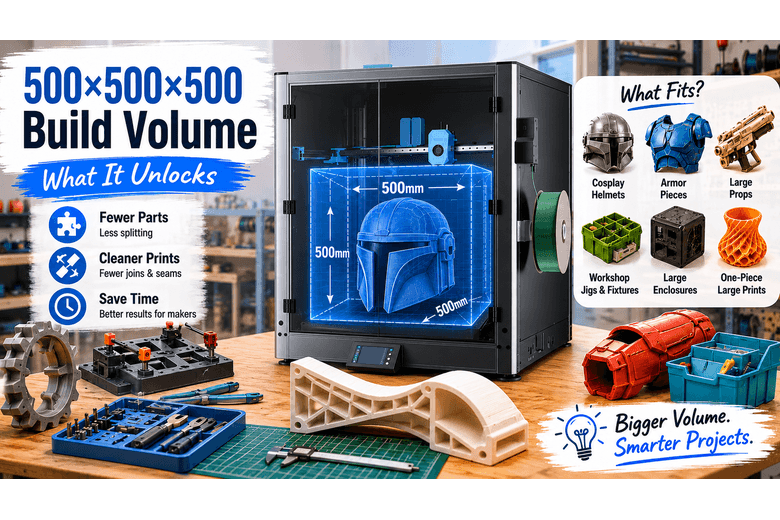
What Can You Print with the Sovol SV08 Max Build Volume?
A practical guide to the Sovol SV08 Max 500×500×500mm build volume, explaining what large-format desktop 3D printing can unlock for UK maker communities. The article covers cosplay helmets, armour pieces, workshop jigs, electronics enclosures, batch printing, and when large models should still be split for better strength, finish and reliability.
Read moreabout What Can You Print with the Sovol SV08 Max Build Volume?
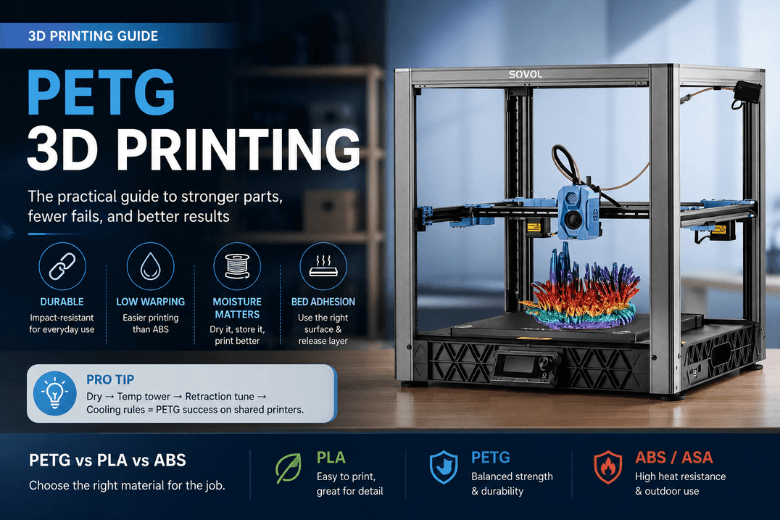
PETG Filament Explained: When Should You Use It?
PETG is a practical choice for stronger, more durable 3D printed parts, but it needs the right setup to avoid stringing, moisture problems and over-adhesion. This guide explains when to use PETG, how it compares with PLA and ABS/ASA, and how to build a repeatable printing workflow for better results.
Read moreabout PETG Filament Explained: When Should You Use It?
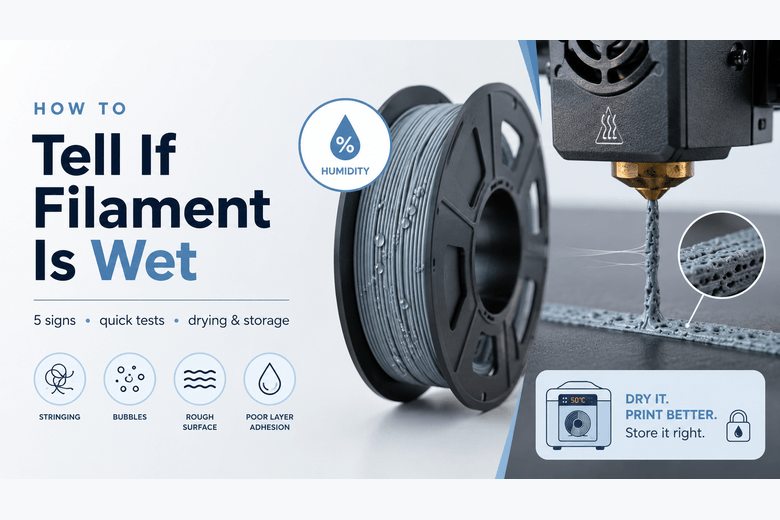
How to Tell if Filament Is Wet (and What to Do Next)
This guide explains how to identify wet 3D printer filament through common signs such as popping sounds, bubbles, stringing, rough surfaces and weaker prints. It also shares simple confirmation tests, material-specific symptoms, safe drying ranges and practical storage habits to help makerspaces and 3D printing users reduce failed prints.
Read moreabout How to Tell if Filament Is Wet (and What to Do Next)
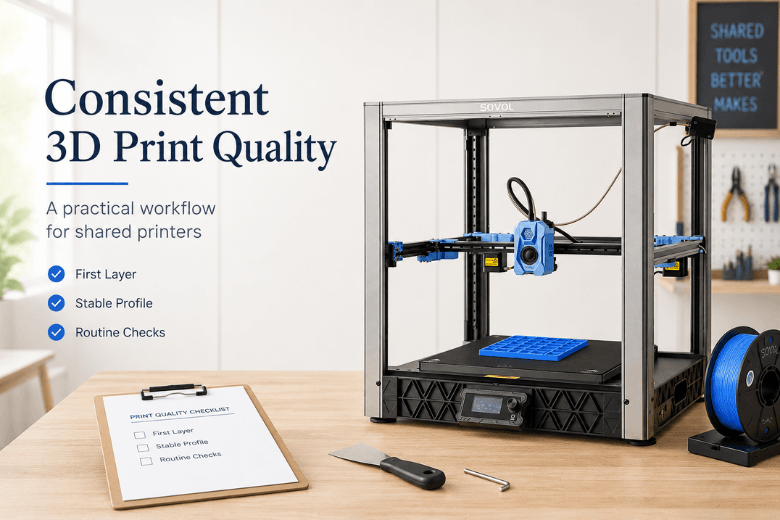
How to Get Better 3D Print Quality from Your Printer Setup
This guide explains how to achieve consistent 3D print quality by treating printing as a repeatable workflow instead of chasing random slicer settings. It covers how to standardise baseline filament and slicer profiles, fix first-layer issues first, calibrate extrusion, tune temperature and cooling, control filament moisture, check motion stability and keep a simple maintenance log. It is especially useful for makerspaces, school labs and shared 3D printers where multiple users need reliable results without constant troubleshooting.
Read moreabout How to Get Better 3D Print Quality from Your Printer Setup
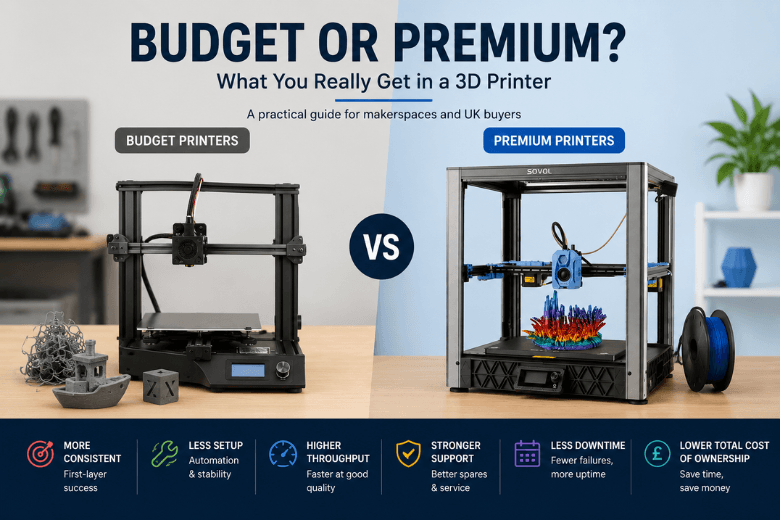
Budget 3D Printers vs Premium 3D Printers: What’s the Difference?
This guide compares budget and premium 3D printers for makerspaces, school labs and UK community users. It explains why the real difference is not just print quality, but repeatability, setup effort, first-print success, downtime, spare parts, support and total cost of ownership. The article helps buyers decide whether a lower upfront price is worth the extra tuning time, or whether a premium/prosumer printer makes more sense for shared spaces that need reliable, repeatable printing.
Read moreabout Budget 3D Printers vs Premium 3D Printers: What’s the Difference?
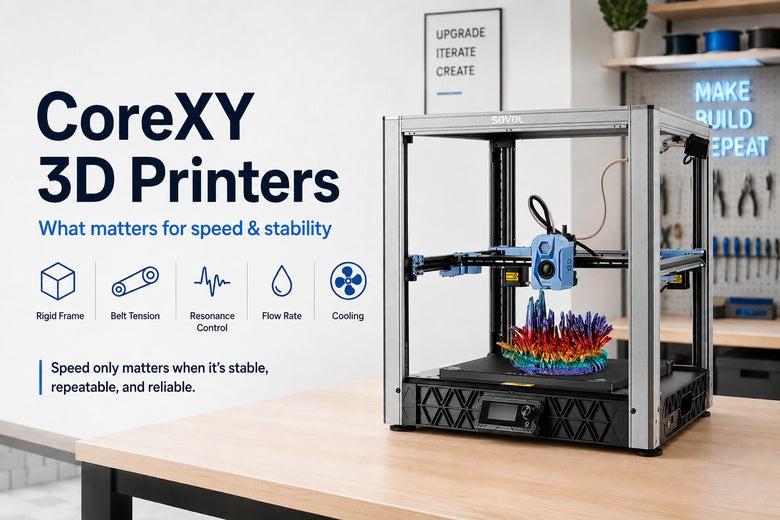
CoreXY 3D Printers Explained: Why Speed and Stability Matter
This guide explains what a CoreXY 3D printer is and why it is often used for high-speed and large-format 3D printing. It compares CoreXY motion with bed-slinger designs, then breaks down the real stability factors behind fast printing: rigid frame design, belt alignment, equal belt tension, resonance control, volumetric flow rate and cooling. The article is especially useful for makerspaces and UK buyers who want a fast printer that remains repeatable, reliable and easy to maintain over time.
Read moreabout CoreXY 3D Printers Explained: Why Speed and Stability Matter
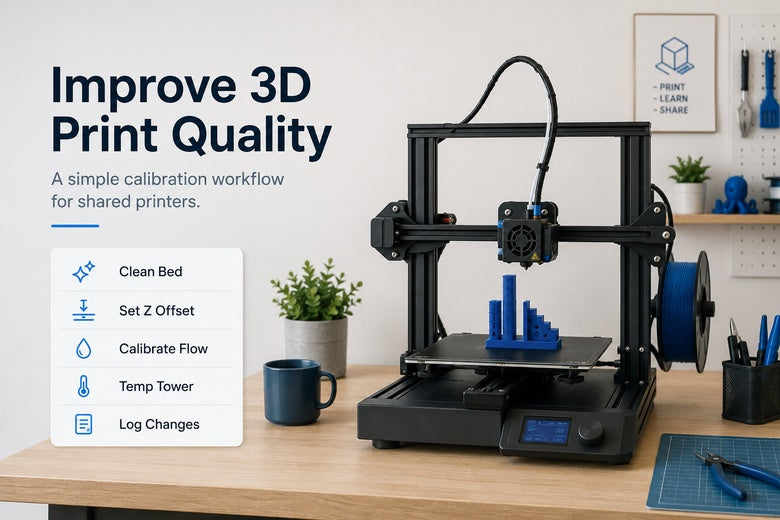
How to Improve 3D Print Quality With a Better 3D Printer Setup
This guide explains how to improve 3D print quality by standardising your setup before changing random slicer settings. It covers a practical calibration workflow for shared printers, including first-layer setup, bed cleaning, Z offset, extrusion and flow calibration, temperature towers, retraction, cooling, filament drying, motion checks and maintenance logs. It is especially useful for makerspaces, school labs and shared 3D printers that need repeatable results and fewer failed prints.
Read moreabout How to Improve 3D Print Quality With a Better 3D Printer Setup