
Blog
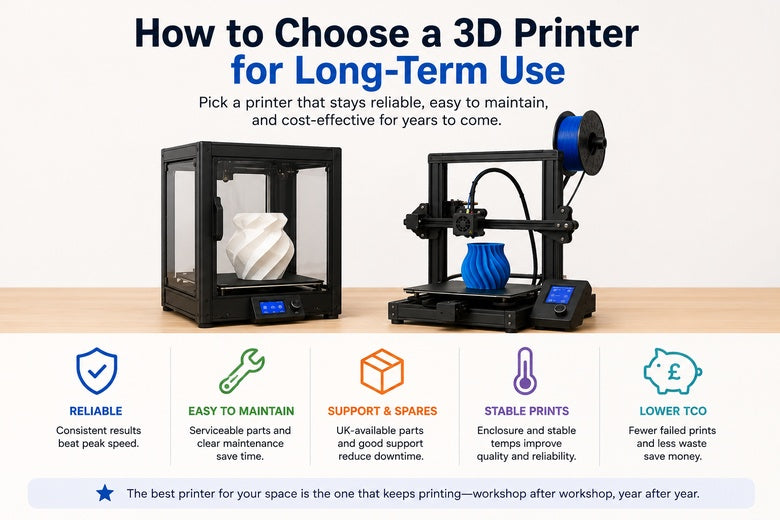
How to Choose a 3D Printer for Long-Term Use
Choosing a 3D printer for long-term use is about more than speed or first-day performance. This guide explains how to evaluate reliability, repeatability, maintenance access, hotend and nozzle serviceability, first-layer stability, enclosure needs, firmware support, spare parts availability and total cost of ownership. It is especially useful for makerspaces, school clubs and shared printing communities that need a printer to stay reliable for years, not just work well out of the box.
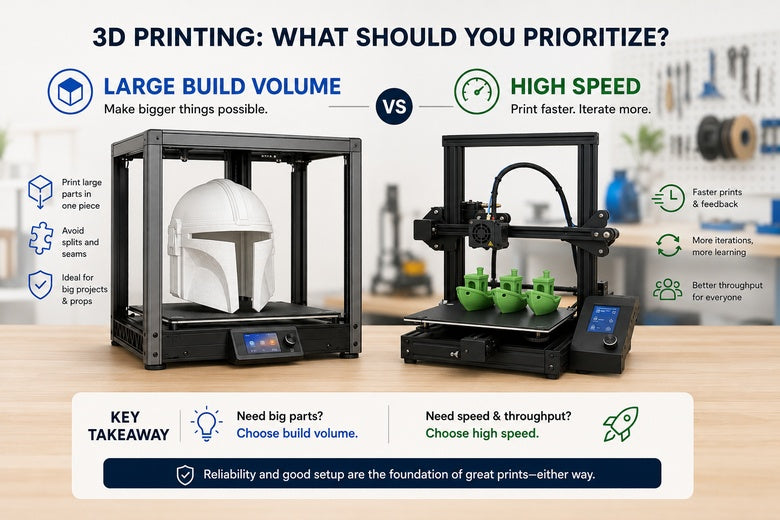
Large Build Volume vs High Speed: Which Matters More for Large-Format 3D Printing?
Should you choose a large build volume 3D printer or a high speed 3D printer for your makerspace? This guide explains the real trade-offs between size, speed and reliability. It helps you decide whether you need bigger single-piece prints, faster iteration, better workshop throughput, or a more reliable setup for shared spaces. You’ll also learn why bed flatness, heating, draft control, maintenance and long-print stability often matter more than headline speed numbers.
Read moreabout Large Build Volume vs High Speed: Which Matters More for Large-Format 3D Printing?
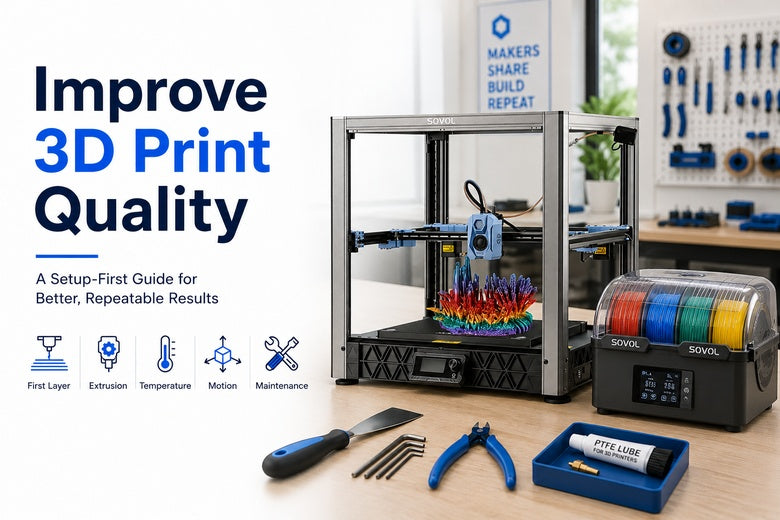
How to Improve 3D Print Quality With a Better 3D Printer Setup
Learn how to improve 3D print quality by standardising your setup before changing random slicer settings. This guide covers first-layer checks, extrusion calibration, temperature tuning, retraction, cooling, filament drying, motion stability and routine maintenance to help makers, schools and shared printer users achieve more reliable and repeatable results.
Read moreabout How to Improve 3D Print Quality With a Better 3D Printer Setup
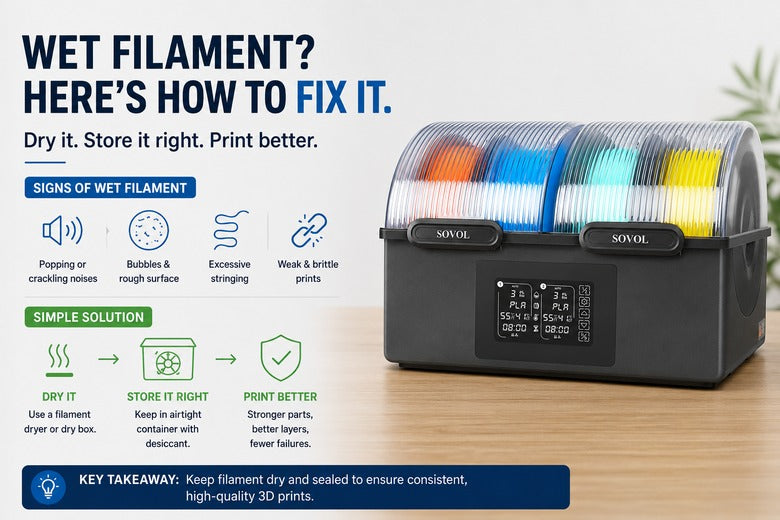
Why wet filament causes bad 3D prints
Wet filament can cause popping sounds, stringing, rough surfaces, inconsistent extrusion and weak or brittle 3D prints. This guide explains how to identify moisture problems, dry filament safely, and store spools properly using airtight containers, desiccant or a filament dryer. It is especially useful for makerspaces, schools and shared 3D printers where consistent print quality and reliable uptime matter.
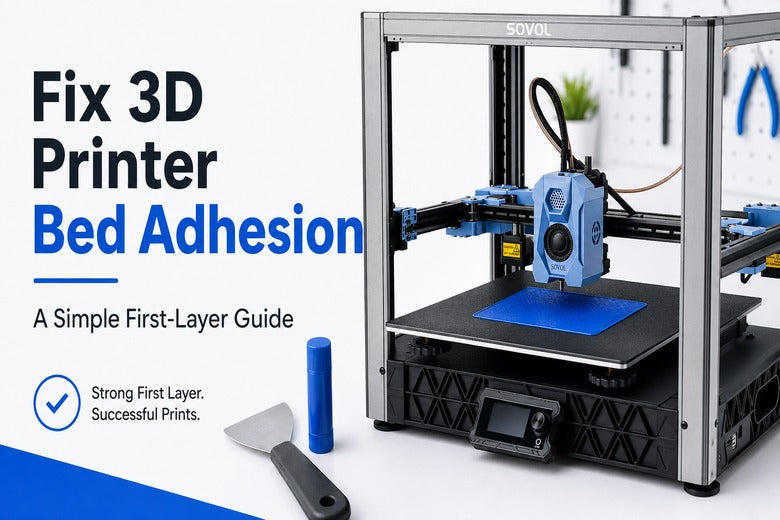
3D printer first layer not sticking: a practical fix order that actually works
Learn how to fix 3D printer bed adhesion problems with a clear, step-by-step first-layer troubleshooting process. This guide explains how to clean your build surface, check nozzle distance, tune Z-offset, adjust bed temperature, manage cooling, and prevent prints from lifting. It is ideal for home users, makerspaces, and shared 3D printers that need more reliable first layers and fewer failed prints.
Read moreabout 3D printer first layer not sticking: a practical fix order that actually works
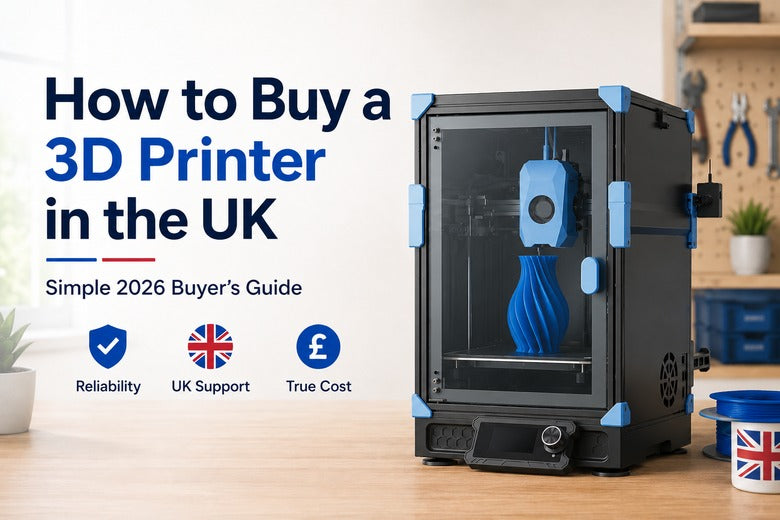
Buying a 3D Printer in the UK: What You Should Check First (2026)
Buying a 3D printer in the UK is not just about speed or build volume. This guide explains how to choose a reliable machine by checking first-layer performance, maintenance access, UK spare parts, warranty support, import costs, delivery expectations, and safety needs such as ventilation and enclosures. It helps UK buyers avoid hidden costs, downtime, and common buying mistakes before choosing the right printer.
Read moreabout Buying a 3D Printer in the UK: What You Should Check First (2026)
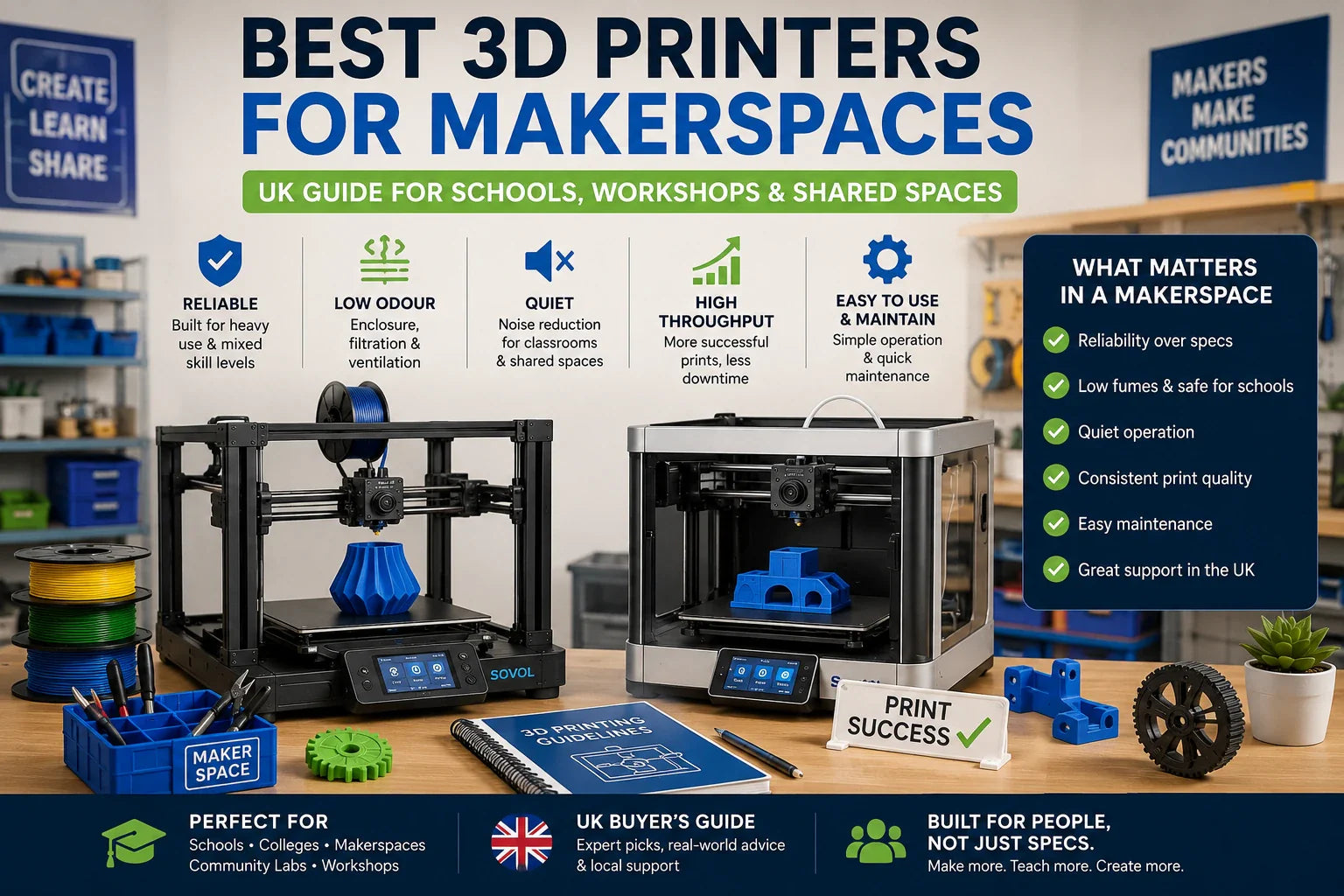
3D printer for home, school and workshop: buying guide
Read moreabout 3D printer for home, school and workshop: buying guide
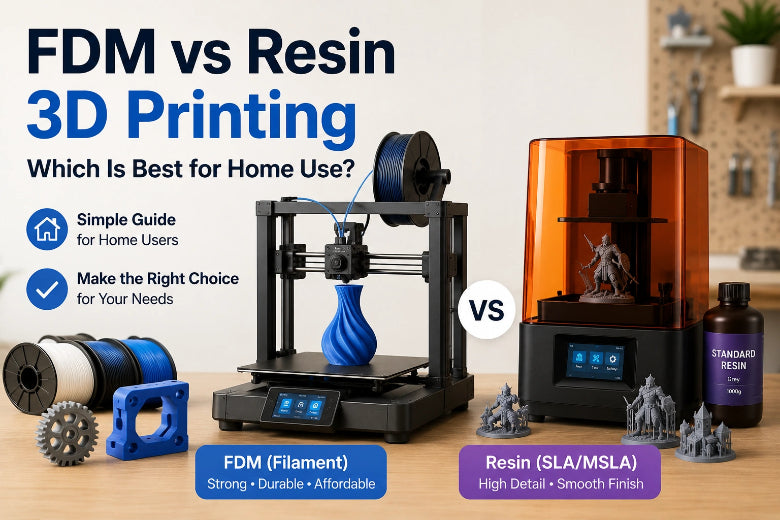
FDM vs Resin 3D Printer: Which Is Better for Home Users?
Read moreabout FDM vs Resin 3D Printer: Which Is Better for Home Users?
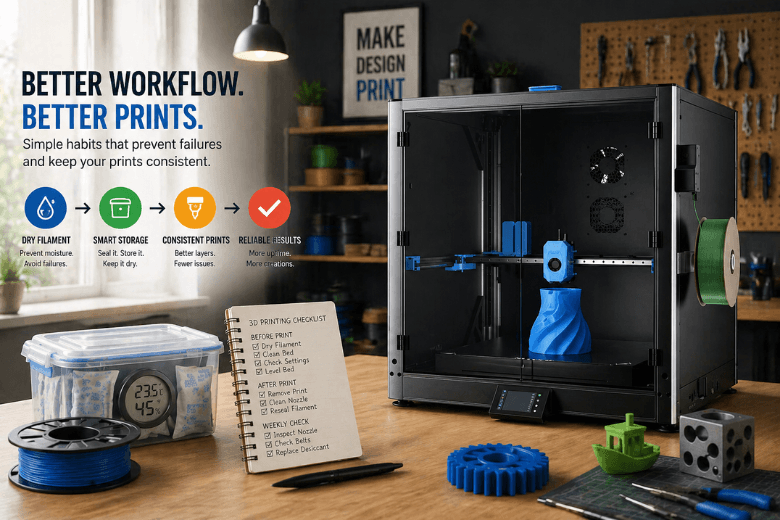
Your First 3D Printer Changes Everything
Your first 3D printer isn’t just a machine—it’s a workflow. This guide explains why wet filament causes most beginner failures and how simple habits like drying and storage can dramatically improve print success in makerspaces.